


Strapping Vs Banding
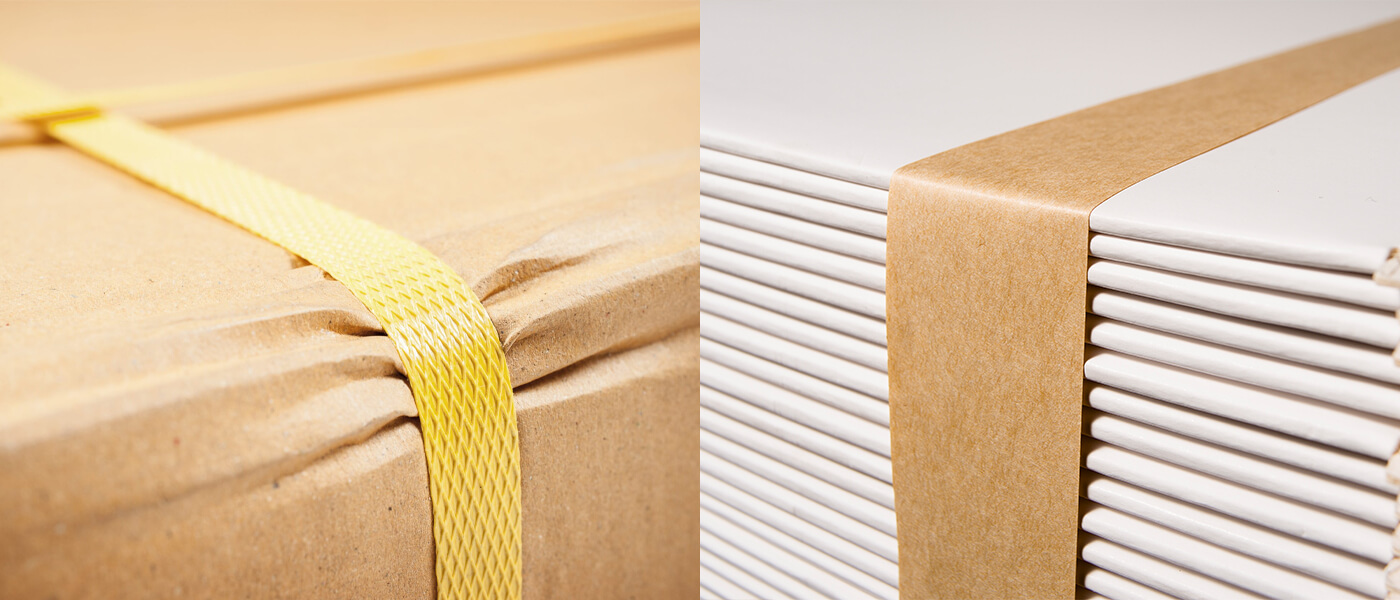
How do I know whether I should band products or strap?
The two most common methods used for stacking are banding and strapping.
While these terms are sometimes used interchangeably, there are differences between them
Banding and strapping involve bundling products together, but the methods and materials used vary.
You may be asking yourself:
Both can bundle products. But in which case which technology makes sense?
And when is banding the better alternative to strapping?
It is important to note that the definitions and applications of banding and strapping may differ in other industries.
In this article, we will explore what banding and strapping are, and their advantages, and we will examine whether it’s the best solution for your Business.
What is a banding machine?
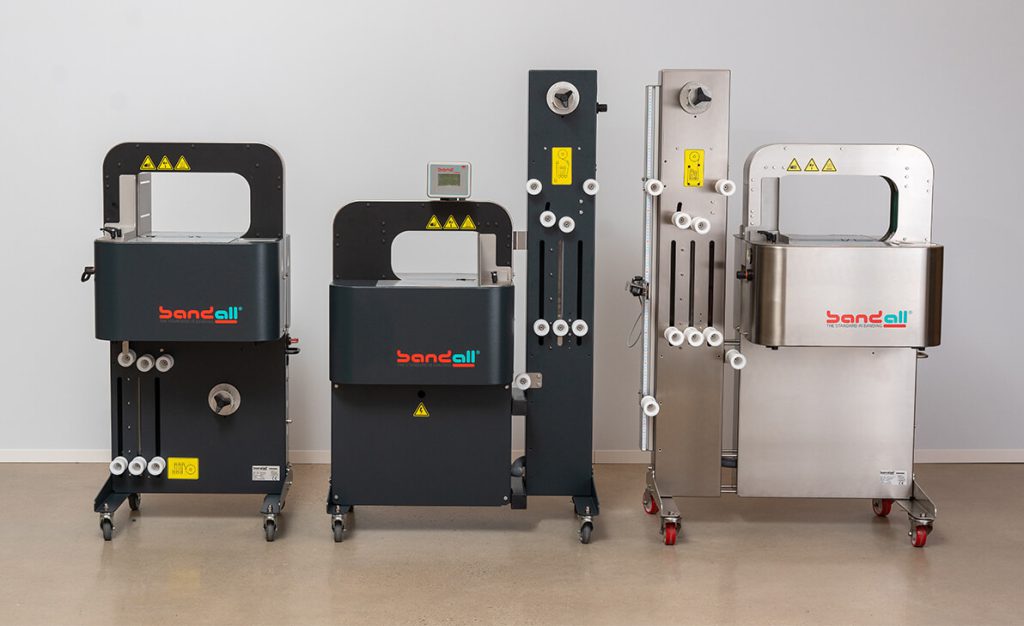
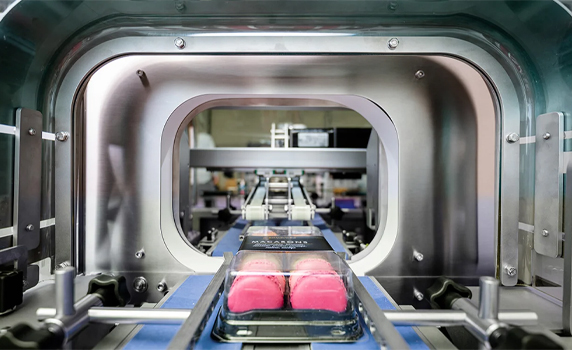
Banding machines provide a way to bundle and showcase products, where one or multiple products are wrapped with a thin band of paper or film. This is done by using a banding machine. An efficient technique for applications such as bundling, labelling or sealing. The band can be used both printed and unprinted. With a wide range of banding machines and additional options, an infinite number of applications is possible in almost all markets.
Additional banding options
With banding, you can efficiently and sustainably label, bundle and seal your products. You can also print variable data during the banding process, which increases packaging flexibility. Print & band leads to less label material required to be in stock. Furthermore, banding leads to huge reductions in packaging materials. Especially compared to traditional packaging and labelling methods, such as shrink film, self-adhesive labels and boxes. Additional packaging elements, such as extra labels, clips, or elastics also become unnecessary.
What is a strapping machine?
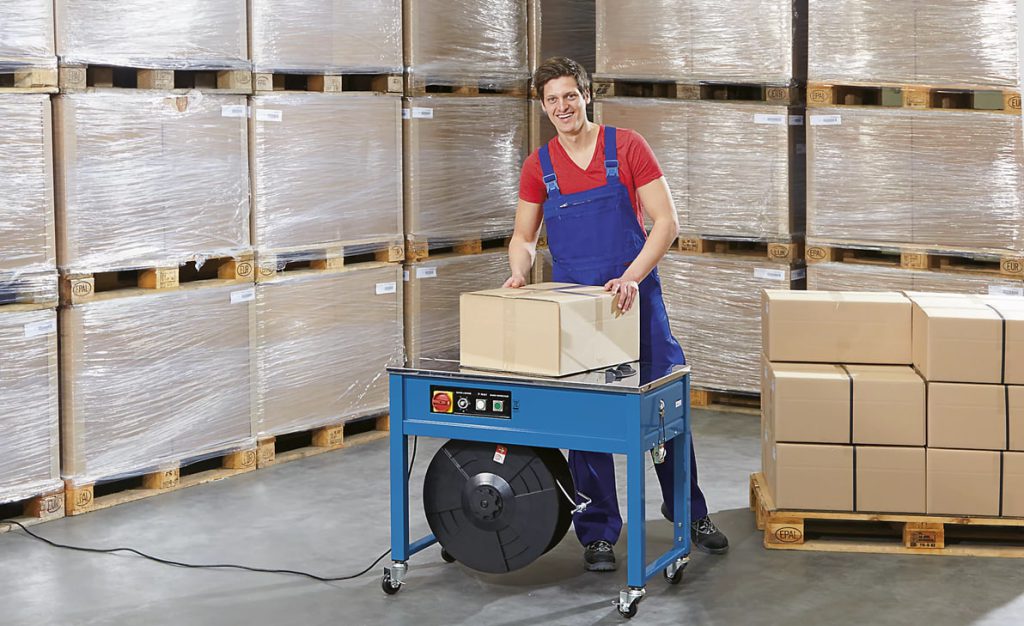
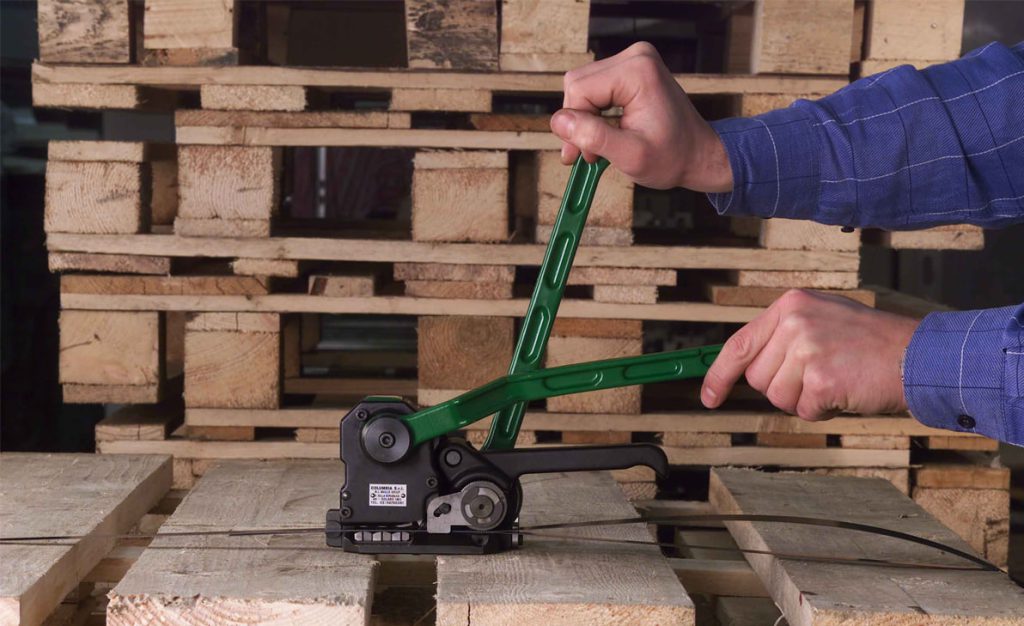
Strapping machines also provide a way to bundle and secure products, and are often chosen when a high tensile strength material is required. Strapping machines are typically used in applications where the product being strapped is not sensitive to the abrasive nature of the strap or the high force applied by the strapping machine.
How does a strapping machine work?
Similar to a banding machine, strapping machines bind material around the products or secure products to a skid/pallet for transport. They replace the need for manual strapping tools, such as tensioners, crimpers, and cutters. The tension and strap strength are set by the operator.
Banding As an Alternative to Strapping
Banding is in many -- but not all -- cases a better alternative to strapping
Top advantages of banding are that the tensioning process is more accurate, which is gentler on the product. Banding also allows for high-quality printing, a wider variety of binding materials, and easier opening.
Still, strapping has its advantages: when expected tensile forces of the packaging exceed 30 kg, strapping is the solution that can best provide the necessary stability.
Weight is a factor when selecting banding or strapping, but it is not the only one. The application and other factors must also be considered.
The following are some of the main reasons manufacturers select banding over strapping as their primary source of bundling:
Reduced likelihood of damage. If too much force is applied, it results in irreversible damage, such as ripped edges and corners. banding technology allows a machine to accurately sense when the banding material touches the product — in fully automated applications, the machine aligns the product on all sides before banding the bundle, creating the tightest possible bundle without any damage. but in the case of strapping, there is a higher possibility of damage to the packaging.
Room for branding & creativity. Bands allow for color printing on both sides, which means they can take on the role of an information and advertising medium for packaging. They can also be printed with dynamic information, e.g. batch numbers, product codes, QR codes, sell-by dates, Expiration date expand more.
Banding As an Alternative to Strapping
Both banding and strapping machines allow for various widths and material choices for the binding.
Banding material
Bands are available in widths of 28, 40, 48, 60, 75, 100 and 125 mm. There is a wide variety of materials: there are banderoles made of brown and white paper, polypropylene (PP), high density polyethylene (HDPE) and biodegradable polylactic acid (PLA). The maximum tensile force of banderoles is 30 kg.
Strapping material
Straps are available in widths of 5, 6, 8, 12, 12.7, 15, 15.5 and 19 mm. They are made of polyester (PET), polypropylene (PP) or steel. Depending on the material, the breaking load and tensile strength of strapping are significantly higher than those of bands.
Banding Sealing and opening
Bands are welded either with ultrasonic or hot wedge. While no heat is generated with ultrasonic technology, band ends are fused with heat in the hot wedge process. With ultrasonic sealing, the sealing strength can be infinitely adjusted. Bands can be opened easily by hand and therefore without tools, which makes them very user-friendly.
Strapping Sealing and opening
Like bands, strapping bands are welded either with a hot wedge or with ultrasonic. Strapping bands are usually opened with the aid of tools (e.g. scissors, knife or side cutter).
Banding Printing
Bands can be printed on both sides in advance with up to 12 colours and thus take on the role of information and advertising medium for sales packaging. Raw or pre-printed bands can be additionally printed with changing information during banding. Examples are batch numbers, codes, production or best before dates. For purely logistical or security purposes, banding is often also used unprinted – for example, transparent, to ensure a view of the product or a code already printed on the product.
Strapping Printing
Straps can also be printed. However, the small width and the rough surface cause limitations here.
Banding Machines
Banding machines are available from stand-alone model and the powerful fully automatic machines that integrated into the production line.
Strapping Machines
The range of strapping machines extends from simple manual strapping tools to fully automatic systems integrated into the production line.
Bandin Applications
Banding is extremely versatile. Classical applications are the bundling of all kinds of products into multipacks, the optimization of internal logistics by forming units, the automation of production lines or branding and the role as information carrier for sales packaging. Thanks to different modes of operation and different product characteristics, the belt tension can be adapted to all possible situations and product characteristics: From paper stacks to egg cartons, from textiles to aluminum profiles and from cucumbers to food trays or sleeves. Banding is also used as a carrying aid for packages weighing up to 30 kg.
All application markets with banding :
1.food industry: Fruit & vegetables, Meat, Seafood, Meat substitutes, Bakery, Confectionary, Nuts & Dried Fruit, Ready-made meals, Frozen, Pet food, Dairy
2.Industry & Logistics: EPS, Wood, Mats & Carpets, Plastics & Rubber, Logistics, E-Commerce
3.Textile: Laundry industry, Mats & Carpets
4:Health & Personal Care: Pharmacy, Personal care
5.Graphics: Post Press Print Finishing, Carton, Labels and In-mould labels, Valuable papers and banknotes
6.General non-food: Promotional packaging, General Bundling, general Labeling
Strapping Applications
If the requirements for the stability and safety of a transport packaging are particularly high and heavy goods are involved, strapping is the right choice. Securing pallets, bundling long and heavy goods such as wooden slats, carrying aids for heavy products – these are all applications for which strapping is the right choice. When strapping more sensitive products (e.g. corrugated cardboard), additional edge protection can be used to ensure that these edges are not damaged.
The price of a strapping or banding machine and the factors that affect it
The price of a strapping or banding machine can vary widely depending on several factors:
Machine Type: Strapping and banding machines come in manual or stand-alone, semi-automatic, and automatic varieties.
Machine Capacity: Machines have different capacity ratings and speed for the volume of packages they can banding or strapping. Higher capacity and speed machines typically cost more.
Brand: Different brands offer strapping and banding machines at varying price points.
Banding machine speed range
Bandall banding machines are known for their high speeds. Their V-series boasts speeds of 40 bands per minute or even higher, thanks to a combination of high-quality control technology and servo techniques. In stand-alone machines, the speed of banding is up to 22 bands per minute, which depends on the product size and settings.
This indicates Bandall machines are well-suited for high-volume production lines.
Strapping machine speed range
Strapping machine speeds can vary depending on the specific model and its features.
Speed Range: Generally, strapping machines range from 30 cycles per minute (cpm) for slower, semi-automatic models to up to 65 cpm for high-performance automatic machines.
Are banding machines eco-friendly?
The environmental friendliness of strapping machines depends on several factors, including the type of strapping material used, the machine’s energy efficiency, and the end-of-life disposal practices.
Strapping Materials:
Plastic strapping: The most common type of strapping, but it is derived from petroleum and can be difficult to recycle. Plastic strapping often ends up in landfills or pollutes the environment.
Steel strapping: Strong and durable, but it is heavy and energy-intensive to produce. Steel strapping can also be difficult to recycle.
Paper strapping: A more eco-friendly option made from renewable resources. Paper strapping is biodegradable and recyclable.
PET (polyethylene terephthalate) strapping: Made from recycled plastic bottles, PET strapping is a more sustainable option than virgin plastic strapping. PET strapping is also recyclable.
Overall, strapping machines can be part of an eco-friendly packaging process by using sustainable strapping materials, choosing energy-efficient machines, and practicing proper end-of-life disposal.
Here are some additional tips for making strapping machines more eco-friendly:
- Use the right strap size: Using the correct strap size for the application can reduce material waste.
- Reuse straps: If possible, reuse straps from previous shipments.
- Minimize strap consumption: Consider alternative packaging methods that require less or no strapping.
- By following these tips, businesses can minimize the environmental impact of their strapping operations and contribute to a more sustainable future.
Want to know more?
Leave your contact details here and we will get in touch!
"*" indicates required fields
Free demo banding now available in middle east
Two options are available:
You can either send us samples of your products or come to our office by making an appointment in advance to attend for the trial.
In case of sending samples, result would be shared with you within two working days after receiving samples (Photos, videos and even we can send packed samples if requested)
For more info, please contact us:
email: sales@bandallmiddleeast.com | WhatsApp number: +971 50 547 7231