
Promotional Packaging for Co-Packers

Choosing Banding Material
2026-09-15
Cheese Twin Pack Banding: Balade Farms
2026-09-22
Promotional packaging for co-packers is a different calculation from promotional packaging for anyone else, and the difference is worth spelling out before the price conversation starts.
A manufacturer buying a banding machine is buying a cost saving. A contract packer buying the same machine is buying something they can put on an invoice. Same equipment, completely different business case — and most quotations are written as though the two are identical.
What contract packers use now
It depends entirely on the client, which is the first clue that something is wrong with the current arrangement.
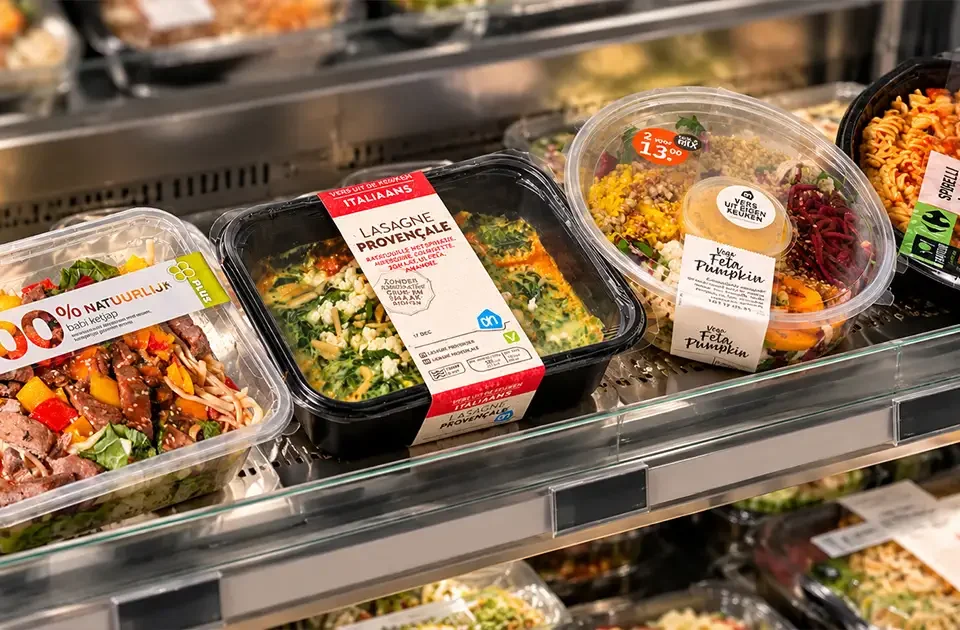
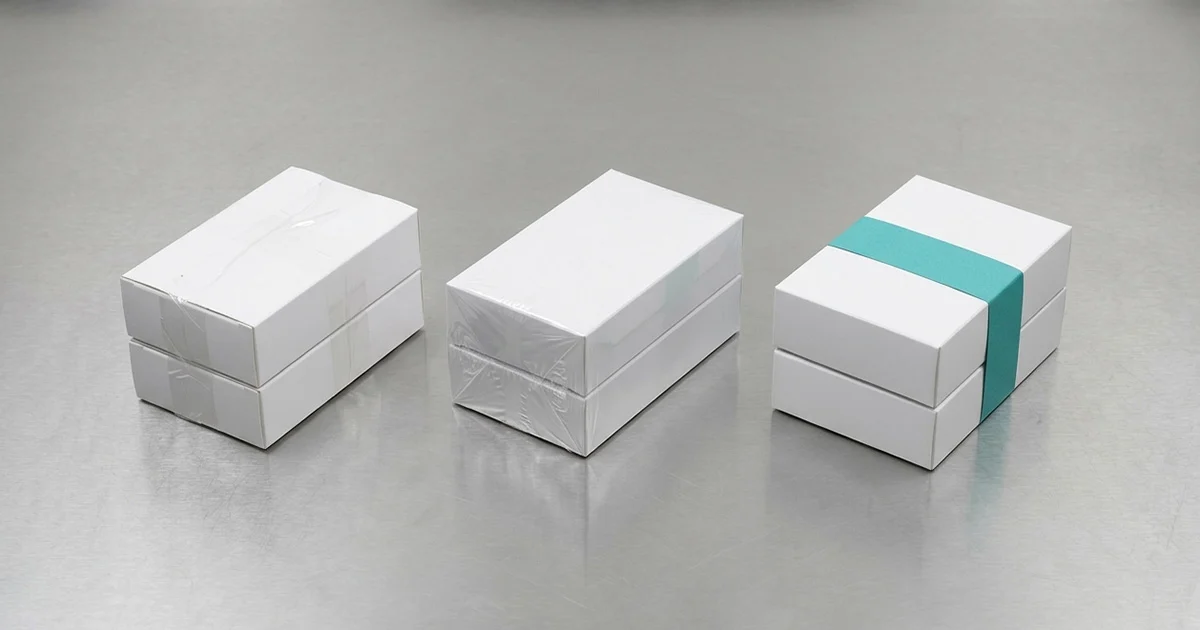
Some promotional packs get taped or tied by hand. That works at low volume and stops working the moment the run gets serious. Labour cost scales linearly, the result varies between operators, and nobody has ever won a contract on the strength of their hand-taping.
Some go through shrink. It holds well and it looks finished, but a heat tunnel is a large piece of floor, a continuous energy draw, and a warm-up period at the start of every shift. For a packer running short promotional jobs between other work, the tunnel spends a lot of its life idling at temperature.
And some get a cardboard sleeve. The sleeve looks best of the three and costs the most in ways that do not show up on the unit price: a die for every pack size, a minimum order, a lead time, and usually a lamination as a second process with a second supplier. Worse, the co-packer rarely controls that timeline. The brand owner signs off artwork late, the tooling queue does not move, and the job that should have shipped in two weeks ships in six.
Why the band suits a packer better than it suits a factory
A manufacturer runs a handful of SKUs through the same line for years. Flexibility is nice but rarely decisive.
A contract packer runs dozens of other people’s products, in batches, with the specification changing every time a new client signs. Flexibility is the entire business.
That is why the band’s economics land differently here. There is no die, so a new pack shape does not put you in a tooling queue. The tension is adjustable from the machine menu, so a soft pouch and a rigid carton run on the same unit with a setting change. A plain roll carries any product at all, and where a client wants their own artwork, a printed roll swaps in and out in about two minutes.
One machine, every client. That is not a claim a sleeve line or a shrink tunnel can make.
The three questions packers ask, in the order they ask them
What does it cost?
This is always first, and the honest answer has two halves.
The capital number is a capital number and we will quote it. But for a packer it belongs in a different column than it does for a manufacturer, because banding is a service you sell rather than an overhead you absorb. The machine is not saving you money on your own packaging; it is letting you quote for work you currently turn down or subcontract.
The consumable half you can calculate yourself. Measure the circumference of the pack, add two centimetres for the overlap, divide the roll length by that figure, and divide the roll price by the result. That is your material cost per pack, and it is a number you can build a price list on. Against shrink, a band uses up to 80% less material and the machine uses up to 90% less energy, because there is no tunnel.
Will my clients actually want it?
This one is fair, and the answer is that you do not have to guess.
What brand owners are asking for right now is shelf visibility, less plastic, and faster turnaround on promotions. A band delivers all three at once: the product stays visible instead of disappearing under film, the material drops sharply against shrink, and a promotion can go out on a plain roll with inline print while a sleeve is still in tooling.
And you can test the proposition without committing to anything. Send us a client’s pack, we band it, and you put the banded sample in front of them. If they say no, it cost you a courier.
Where would I even put it?
This is the one that surprises people, because the assumption runs the other way.
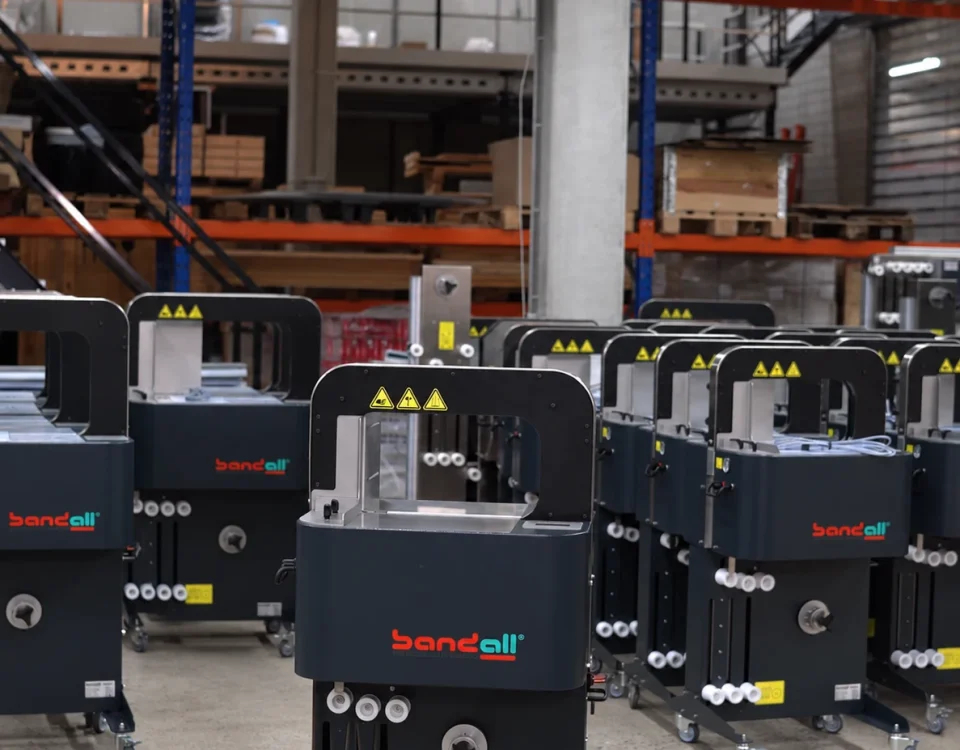
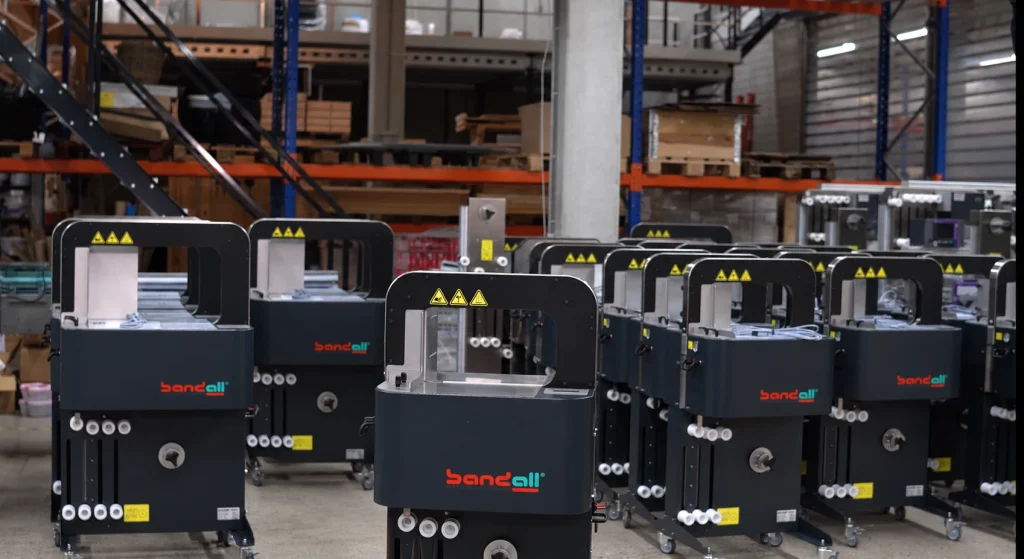
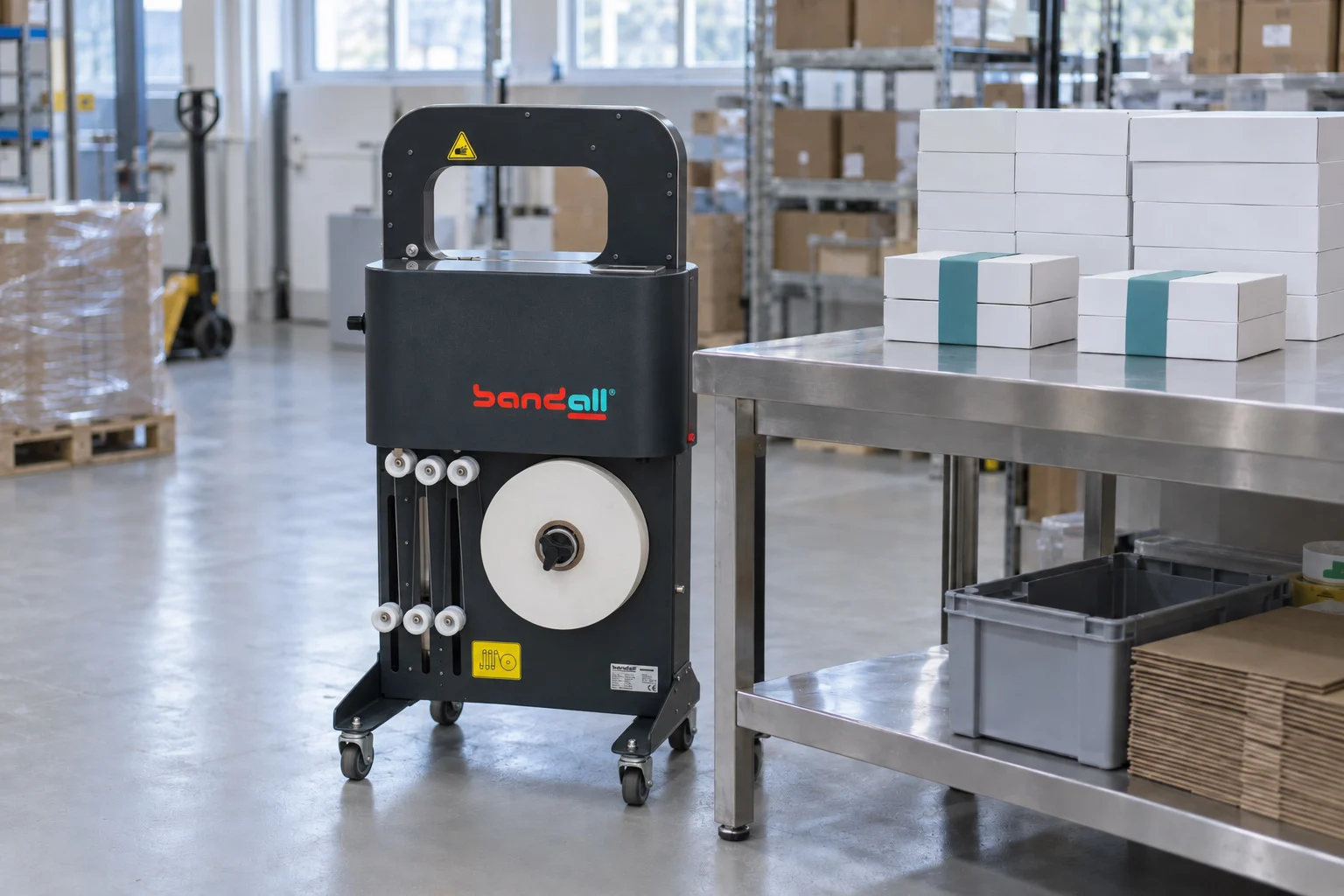
The machine is small. The smallest stand alone unit is around 75 kilos, every model sits on four wheels, and it needs power, an air compressor, a roll and the product. No tunnel, no bay, no dedicated line. It rolls to where the job is and rolls out of the way when the job is finished.
For a packer with limited floor and a layout that changes between contracts, that portability is worth more than it sounds.
Speed to market is the argument that closes
Promotions are a timing business. A two-for-one that lands three weeks after the retailer’s window has closed is not a promotion, it is stock.
Here is where the methods separate. A sleeve needs artwork approval, then a die, then a minimum order, then a lead time, then laminating. Shrink needs the artwork on a separate label because the film itself carries nothing.
A band with a plain roll and an inline printer can run tomorrow — barcode, offer, dates, all printed at the moment of banding. If the client wants a fully pre-printed band, that carries a minimum order of 100 rolls and a lead time of about three weeks, which is still ahead of tooling and worth planning for rather than discovering.
For the packer, that means you can say yes to a job your competitor has to decline.
Where a co-packer should not use banding
Selling this properly means knowing what to keep doing the way you already do it.
Closing a shipping carton stays with tape. A band goes around a box; it does not shut one. Nothing about this changes.
Heavy or long bundles stay with strapping. Steel or PET under high tension holds structural timber and pallet loads. No band at any thickness replaces that.
A full moisture barrier or tamper evidence across an entire surface stays with shrink. A band covers a fraction of the pack, deliberately.
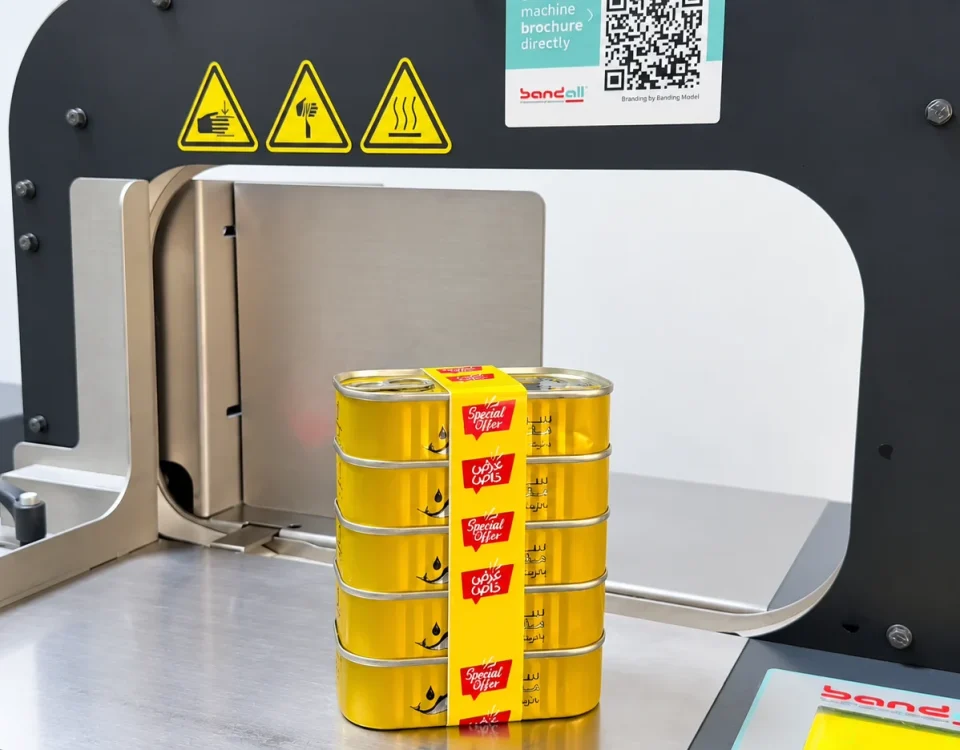
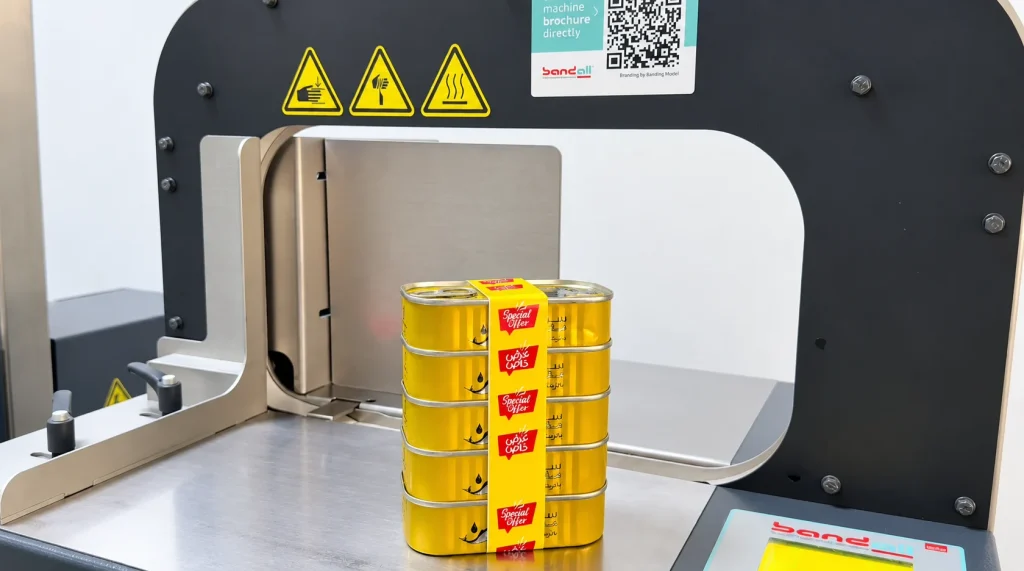
And some products simply do not band. The test is arrangement: the items have to form a block the band can close around. Four tuna cans stacked on top of each other band cleanly. Four tall cans standing side by side do not.
Trying it without buying anything
The useful next step is not a quotation. It is a sample.
Send us a pack from one of your clients, or bring it to the showroom in Dubai Investments Park. We will band it on the machine and material that suit it and send back the banded samples with photographs and video, within two working days. You show those to the client and find out whether the demand is real before anyone spends anything.
If it is, tell us your volumes and we will run the cost-per-pack arithmetic so you can price the service properly rather than guessing at it.
Talk to us about adding banding to your service menu — get in touch, see what promotional packaging looks like in practice, or look at the non-food range for the mixed work most packers handle.
Frequently asked questions
Why would a co-packer buy a banding machine?
Because for a contract packer it is a billable capability rather than an overhead. A manufacturer buys one to reduce their own packaging cost. A packer buys one to quote for promotional work they currently turn away or subcontract.
How much floor space does a banding machine need?
Very little. The smallest stand alone unit weighs around 75 kilos and every model sits on four wheels. It needs power, an air compressor, a roll and the product. There is no heat tunnel and no dedicated bay.
Can one machine handle different clients’ products?
Yes, provided each product forms a block the band can close around. Tension is adjustable from the machine menu, so a soft pouch and a rigid carton run on the same unit with a setting change rather than a tooling change.
How fast can a promotional band be turned around?
A plain roll with inline printing can run immediately — offer, barcode and dates print as the band is applied. A fully pre-printed roll carries a minimum order of 100 rolls and a lead time of about three weeks, which is still faster than sleeve tooling.
How do I work out what to charge for banding?
Start with the material cost per pack: circumference of the pack plus two centimetres for the overlap, divide the roll length by that, then divide the roll price by the number of packs. Add your machine time and margin on top of that figure.
What should a co-packer keep doing the old way?
Carton closure stays with tape. Heavy and long bundles stay with strapping. Full moisture barriers and whole-surface tamper evidence stay with shrink. Banding takes the promotional and multipack work, not everything.