
Skin Packs and Banding: What Works Together

What Are Band Labels?
2026-10-15
Round or Rectangular: Banding a 3-in-1 Tuna Promotion Pack
2026-10-19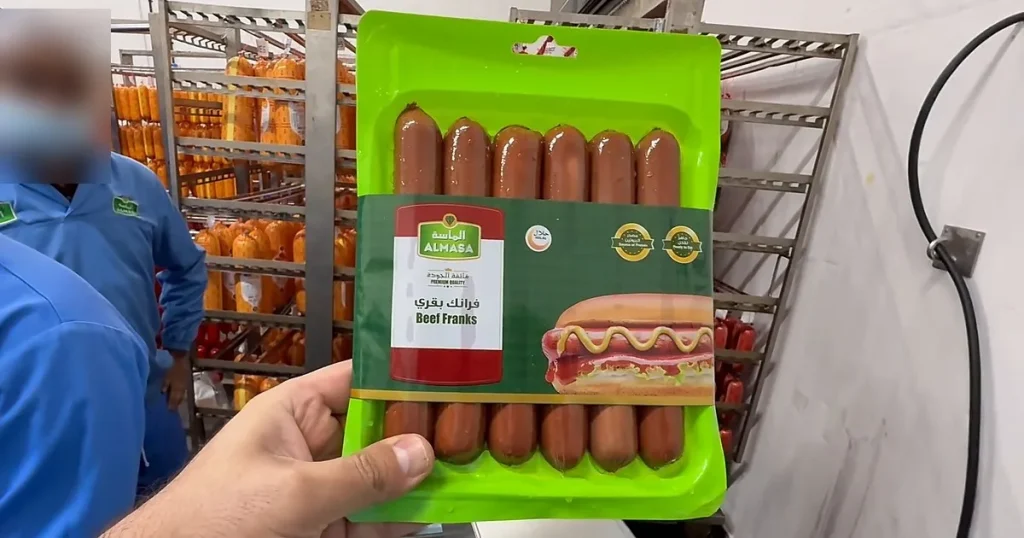
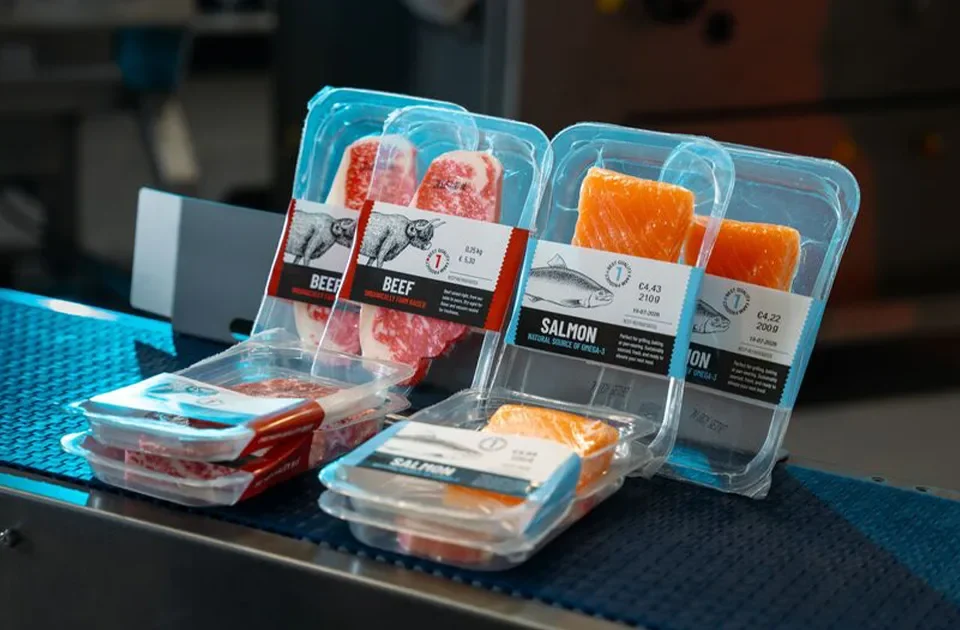
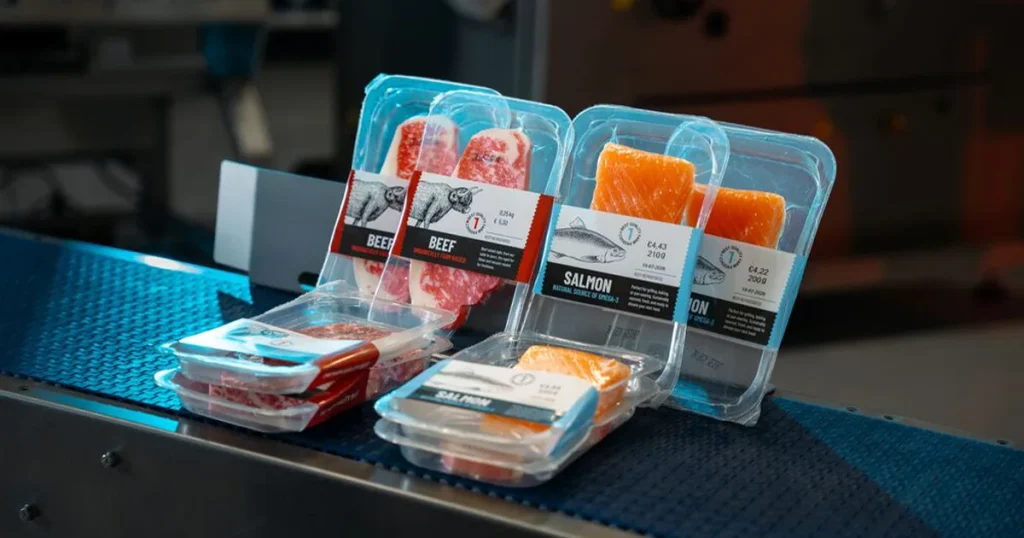
A skin pack has already solved most of the problems it was designed to solve. The film is drawn down tight over the product, the seal is made, the pack is stable and the product is visible. Nothing about that needs fixing.
What a skin pack does not have is a surface for your brand. The film is clear, curved and cold, and it is doing a structural job nobody wants to interrupt. Skin packaging banding fills that gap, and the two decisions that matter are which material and how much tension.

Two labels became one band
The clearest version of this we can show you is running in Dubai.
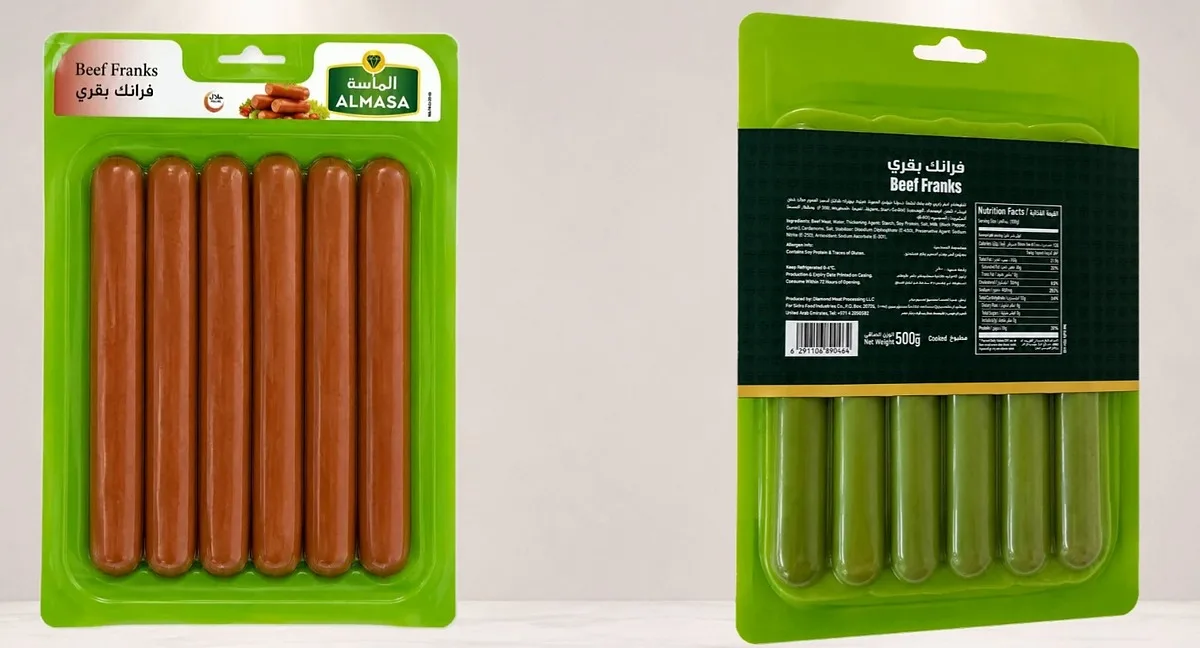
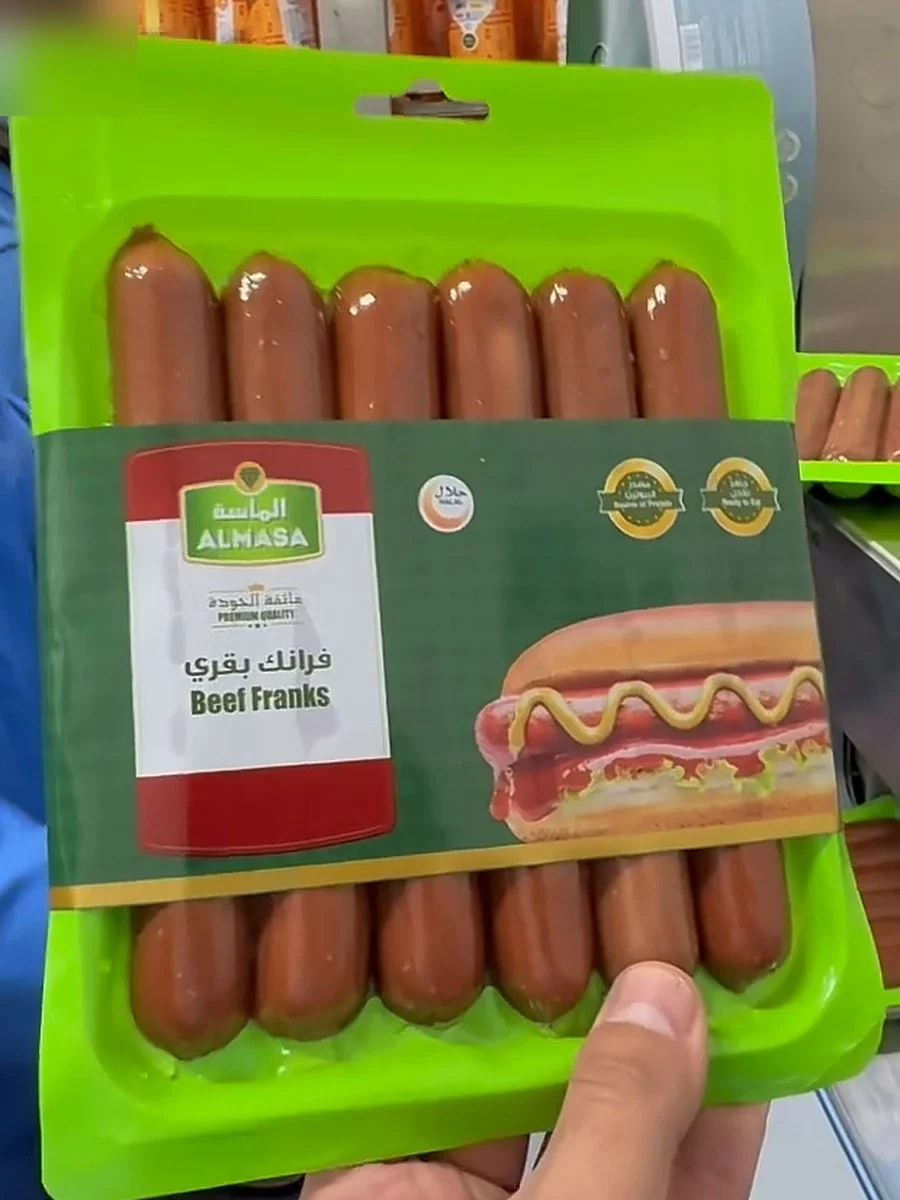
We installed a banding machine at Diamond Meat Processing LLC, for their ALMASA brand. First product on the line is beef frank skin packs, with more to follow.
Before the machine, each pack took two self-adhesive labels, applied by hand — the brand on the front face, the full product information on the back. Two placements, two chances to be crooked, two label rolls to hold in stock.
One film band replaced both. It wraps the pack all the way round, so the front carries the brand and the back carries the information, printed in one pass on one consumable. That is 360° branding on a pack that previously had two stickers on it.
The band is applied inline at up to 1,200 packs per hour, positioned the same way on every single pack. Nobody is placing anything by hand any more.
Why labels struggle on a skin pack
The label has to sit on drawn-down film that is usually cold and often slightly damp from the chiller. Adhesive is working against both. A label lifting at the corner of a meat tray reads as a quality problem to a shopper whether it is one or not.
And on a skin pack there are often two faces that need print, which means two applications, two positions to get right and two things to go wrong.
A band goes around the pack rather than onto it. The surface stops being part of the decision, and one pass covers both faces. That is the whole idea behind band labels.
If you are using a printed cardboard sleeve today rather than labels, a band can take that over as well — and without the die, the minimum order and the lead time that every new sleeve size brings with it.
Film, not paper — the opposite of what we tell most customers
On a skin pack the material choice is close to settled before the conversation starts. About 99% of the time it is film.
The reason is where the pack goes next. A skin pack is chilled or frozen and stays that way through the store. Paper does not survive a chiller and a freezer: it takes up moisture, it weakens, and the first thing you notice is a band gone soft on a pack that still has to look premium on the shelf.
Worth being direct about, because we spend most of our time arguing the other way. In a laundry, roughly nine out of ten bands we quote are paper, for sustainability reasons. On a skin pack that same recommendation would be wrong. Same machine, same roll change, opposite answer — because the two packs live in completely different places.
If anyone offers you a paper band for a frozen skin pack, ask them where they have run it.
Soft trays and uneven packs
Two things about skin packs that break other methods, and both come down to how the band arrives.
Soft trays. Put too much tension on a flexible tray and the tray gives. The sides pull in, the pack loses its shape, and a premium presentation becomes a reject — not because the band failed, but because it held too well. Controlled band tension is what prevents that: the value is set from the machine menu rather than left to how hard an operator pulls, so a flexible tray keeps its shape and comes out undamaged. Setting that value on your tray is our job at the demo, not yours afterwards.
Uneven packs. A skin pack is rarely a flat-topped box. Very often the product sits higher than the tray rim, which is exactly the geometry a sleeve cannot follow and a label cannot lie flat on. The band wraps neat and tight over that profile instead of fighting it.
The feed is why. The band loop is formed in the arch above the product before the pack arrives, so the pack is never lifted, turned or threaded through anything — which matters when you are handling a sealed pack whose seal you would rather not stress. The vacuum feed guides the band around the tray rather than dragging it across the corners.
What goes on the band
Everything the labels were carrying, in one pass.
Fixed branding comes on a pre-printed roll — your artwork, your colours, in the same position on every pack. That route carries a minimum order of 100 rolls and about three weeks’ lead time, so it belongs in the plan rather than in a rush.
Anything that changes goes on inline, printed at the moment of banding: weight, pack date, use-by date, batch, barcode. Nothing is printed until the pack is in front of the machine, which is the whole point for a product with a variable weight.
Most lines end up running both.
Where banding is not the answer
A full moisture barrier. The skin film already is that. A band covers a strip by design and is not trying to be a second barrier.
Transport loads. Securing a stack of trays onto a pallet is strapping. A band holds a pack or a small group of packs.
Closing a shipping carton. Tape.
And the arrangement has to work. The band has to close around a block and hold it. One tray does. Two trays stacked do. A loose group that will not sit square does not — and tightening the band is not the fix, it is how you deform the tray.
Send us a skin pack
Send us the pack, or bring it to the showroom in Dubai Investments Park. We band it with film, at a tension set on your own tray, and send back photographs, video and the banded packs within two working days. If it is a soft tray, or the product sits above the rim, that is exactly the one we want to see.
Send samples for a free banding trial — contact us, or look at banding meat packaging, banding seafood packaging, film bands and branding by banding.
For band widths, roll lengths and paper or film specifications, see our guide to banding materials.
Frequently asked questions
What is skin packaging banding?
Applying a printed band around a sealed skin pack so the pack carries branding, weight, date and a barcode without a self-adhesive label or a cardboard sleeve. The band wraps around the pack and seals onto itself; nothing is stuck to the film.
Can one band replace two labels?
Yes. At Diamond Meat Processing in Dubai, ALMASA beef frank skin packs previously took two hand-applied labels — brand on the front, product information on the back. One film band now carries both, wrapping the pack so the print appears on both faces in a single pass.
Paper or film band for a skin pack?
Film, about 99% of the time. A skin pack is chilled or frozen and stays that way, and paper takes up moisture and weakens in a chiller and freezer. This is the opposite of what we recommend for a laundry, where most bands are paper.
Will a band deform a soft skin pack tray?
Not with controlled band tension. The tension value is set from the machine menu rather than left to the operator, so a flexible tray keeps its shape and comes out undamaged. We set that value at the demo, on your own tray.
Can a band fit a pack where the product sits higher than the tray?
Yes, and this is one of banding’s clearer advantages on skin packs. The band wraps neatly over an uneven profile, where a sleeve cannot follow the shape and a label cannot lie flat.
How fast can skin packs be banded?
At Diamond Meat Processing the band is applied inline at up to 1,200 packs per hour, positioned identically on every pack.
Where is banding not right for a skin pack?
When the requirement is a second full moisture barrier, when a pallet load has to be secured for transport, when a shipping carton has to be closed, or when the packs will not sit square enough to form a block the band can hold.