
Cheese Twin Pack Banding: Balade Farms

Promotional Packaging for Co-Packers
2026-09-21
The Real Advantages of a Banding Machine
2026-10-01Cheese twin pack banding at Balade Farms replaced a two-person labelling job with a single operator and a stand alone banding machine.
Output went from 200 twin packs an hour to 1,200.

At a glance
| Before | After | |
|---|---|---|
| Method | Self-adhesive labels applied by hand, barcode applied separately | One printed band carrying the barcode |
| Operators | 2 | 1 |
| Output | Up to 200 twin packs an hour | Up to 1,200 twin packs an hour |
| Output per operator | 100 packs an hour | 1,200 packs an hour |
| Label backing waste | Every shift | None |
| Material cost | — | Up to 58% lower than the labels it replaced |
The job before banding
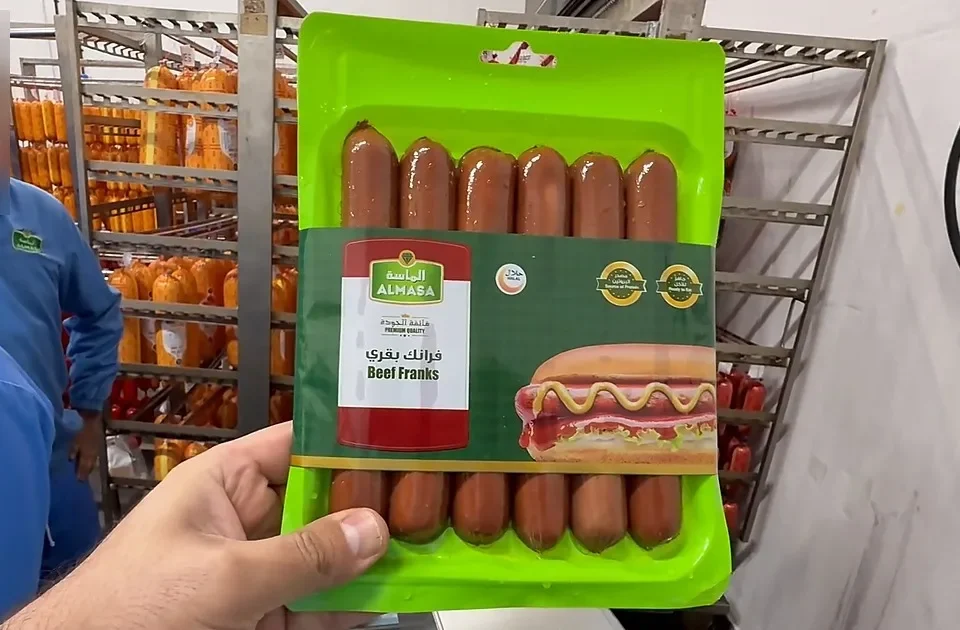
The product is simple: two 400 g packs of cheese sold together as a promotional twin pack.
Holding them together was not. Two people applied self-adhesive labels by hand, and the barcode went on as a separate step. Every label came off a backing sheet, and every backing sheet went in the bin. By the end of a shift that was a visible pile of waste, and the line topped out at around 200 twin packs an hour no matter how hard anyone worked.
Nothing about that is unusual. It is how a lot of promotional packs are still made in this region — it works, it is familiar, and it quietly caps the line.
What changed
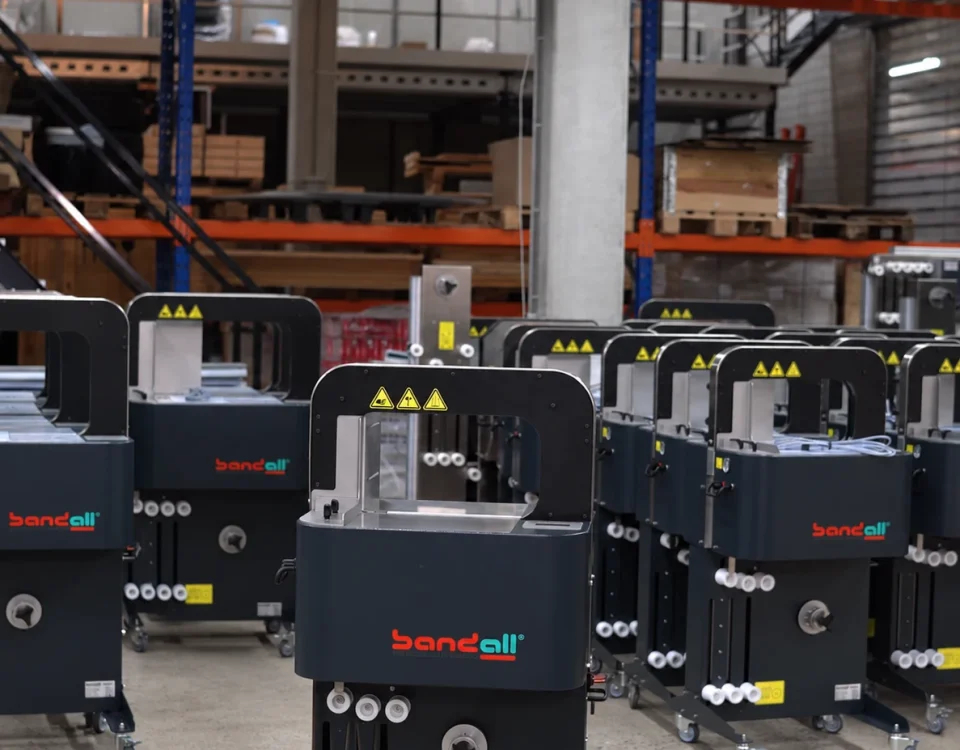
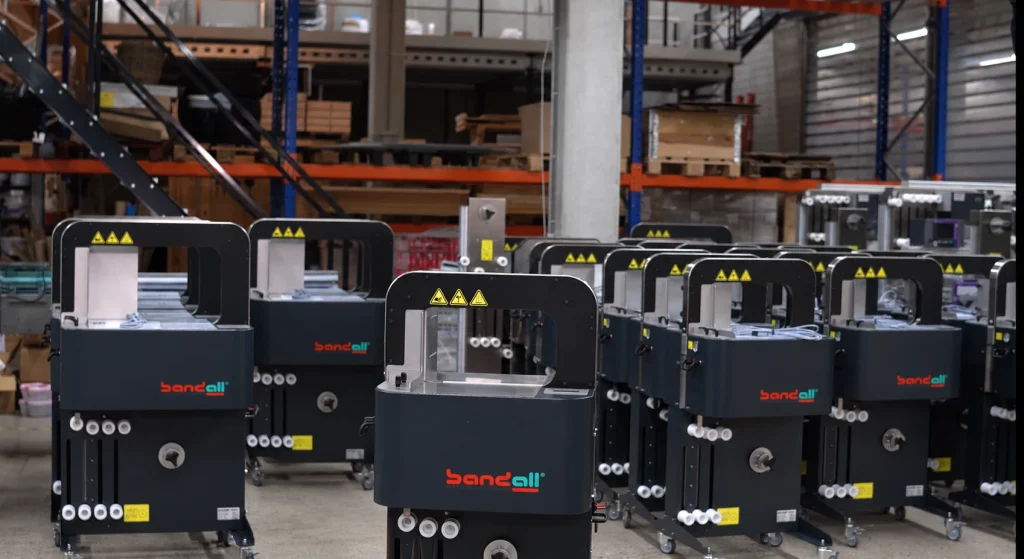
We installed a Bandall stand alone banding machine, model 32-20-30, and trained the team on site.
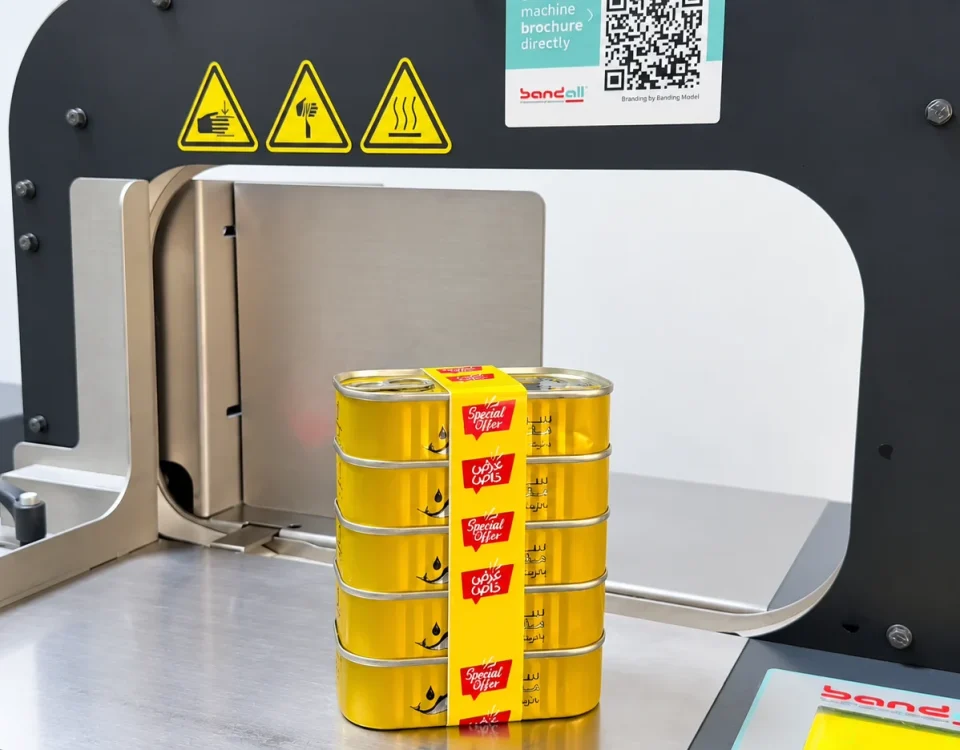
The label and the barcode were replaced by a single printed roll. The barcode is printed on the band itself, so there is no second consumable and no second application step. And because a printed band has no backing sheet, the waste stream disappeared with it.
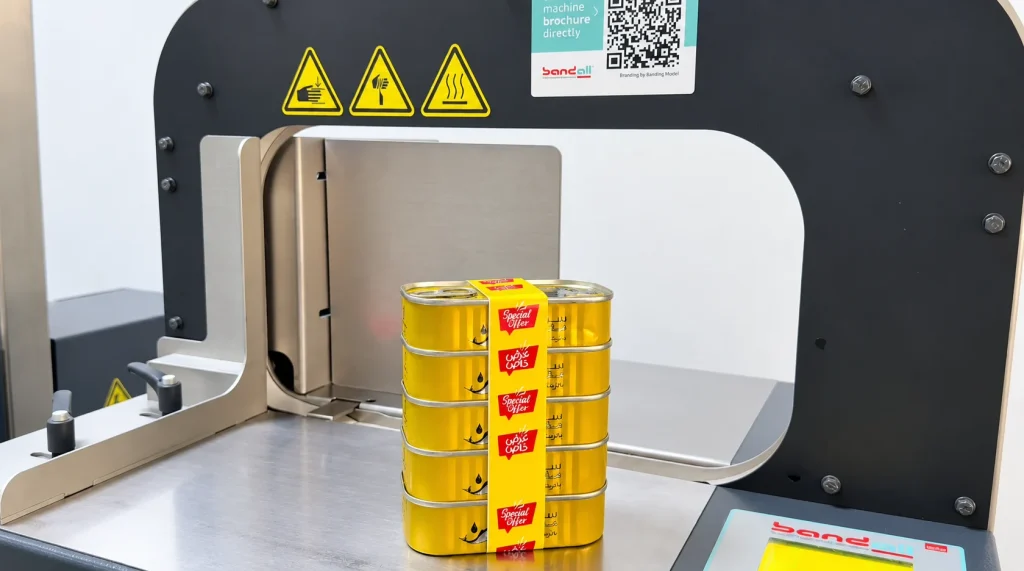
One operator now places each twin pack in the arch. The machine does the rest: draws the band around the pack, tensions it, seals it underneath and cuts.
The numbers
Output went from a maximum of 200 twin packs an hour to up to 1,200. That is six times the line.
The more telling figure is per person. Before, two operators produced 200 packs an hour between them — 100 each. Now one operator produces up to 1,200. Output per operator rose twelve-fold, and the second person moved to other work.
Material cost came down by up to 58% against the labels it replaced. That saving comes from two places at once: one consumable instead of two, and no backing paper bought only to be thrown away.
The 58% is specific to this comparison. It is measured against self-adhesive labels plus a separate barcode, not against shrink film or a cardboard sleeve, and a different starting point would produce a different number.
Why it worked on this product
Two stacked cheese packs form a stable block, which is the real test for whether something bands well. A band needs something to close around, and a flat twin pack gives it exactly that.
The band also goes around the sealed pack, not the cheese, so nothing about the food itself changes. And on chilled product, a band has a practical edge over a label: it wraps rather than sticks, so it does not depend on adhesive gripping a cold surface.
The same arithmetic applies to anyone running a similar pack. Measure around the pack, add two centimetres for the overlap, divide the roll length by that figure, and you have your packs per roll — the full method is in our guide to choosing banding material.
What this does not show
This is one line, one product and one starting point. A line moving from shrink film, or from a sleeve, will see different figures, and a line that is already automated will not see a twelve-fold jump in output per person. The honest way to find your number is to test your own pack.
See it on your own product
Send us your pack, or bring it to our showroom in Dubai Investments Park. We band it, film it and send back the banded samples within two working days — and if you share your current output and consumables, we will work out the cost per pack for your line.
Book a free demo in Dubai — contact us, see the stand alone banding machines, or look at dairy banding for other cheese and dairy formats.
Frequently asked questions
How much faster was banding than hand labelling at Balade Farms?
Output rose from a maximum of 200 twin packs an hour to up to 1,200 — six times the line — while the number of operators went from two to one.
Where did the material saving come from?
Two consumables became one. The self-adhesive label and the separate barcode were replaced by a single printed band carrying the barcode, and the label backing sheets that were thrown away every shift were eliminated. Material cost fell by up to 58% against the labels it replaced.
Which machine was used?
A Bandall stand alone banding machine, model 32-20-30, fed by one operator.
Would the same results apply to my line?
Not automatically. The figures depend on the product, the pack format and what the band is replacing. The quickest way to find out is to send us a sample of your own pack.