
The Real Advantages of a Banding Machine

Cheese Twin Pack Banding: Balade Farms
2026-09-22
Pharmaceutical Shelf Ready Packaging
2026-10-05
The advantages of a banding machine are usually listed as if one person were reading them. In practice, three people sign off on the purchase, and each of them is looking at something different.
The production manager wants to know whether it runs. Finance wants to know what it saves. The brand manager wants to know what it does on the shelf. This article takes each view in turn, then looks at the advantages that only matter once the machine has been on the floor for a while.
What the production manager sees
The first advantage is how little stands between delivery and output.
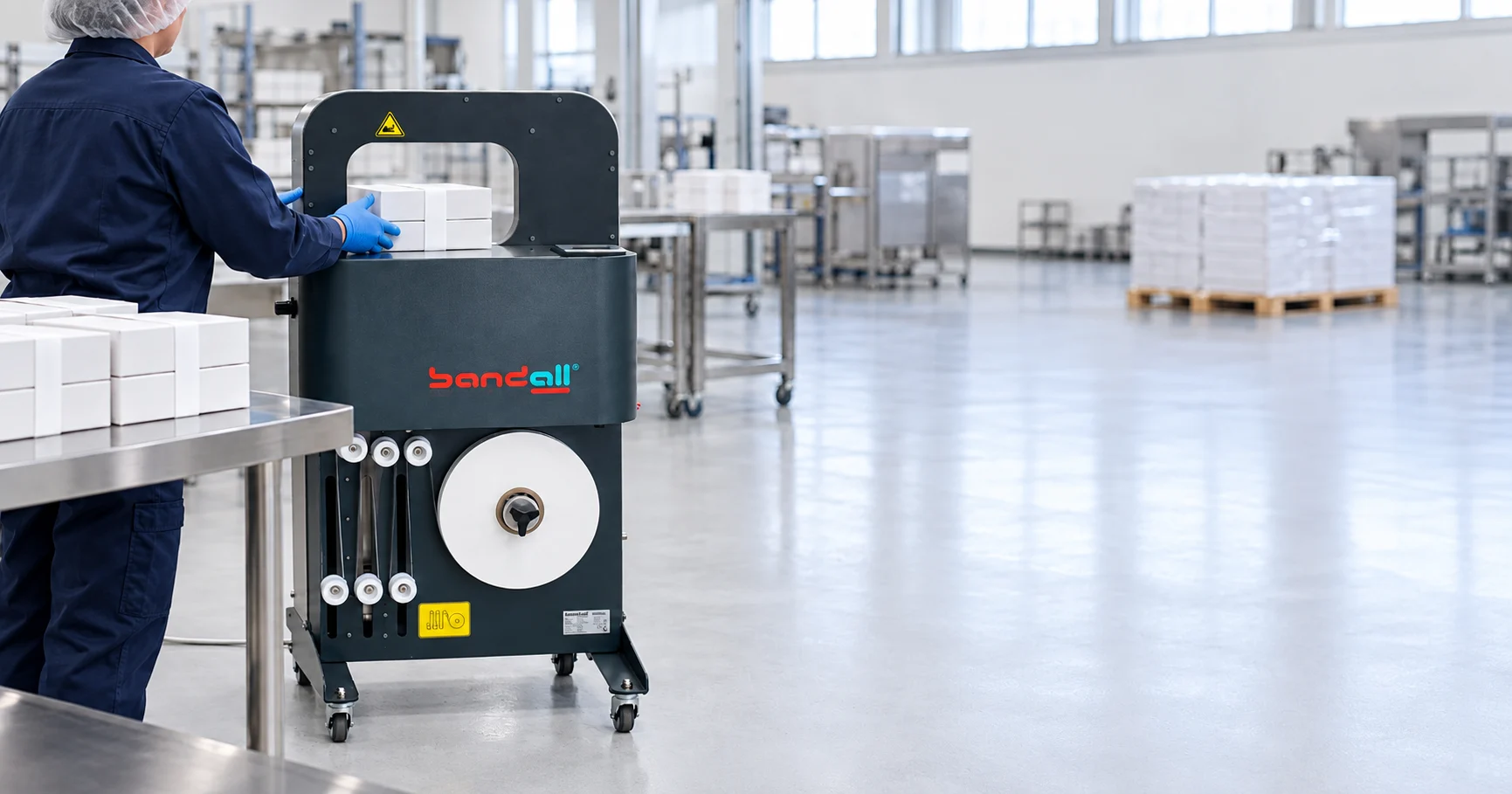
At a recent demo in a print shop running in-mould labels, the machine was banding an hour after it arrived, and the line’s output doubled within the first two hours. There was no installation project behind that. A stand alone machine runs on ordinary single-phase mains power, and apart from an air compressor, a roll and the product, it needs nothing else.
The operators noticed something else first. The machine took over a job they had been doing by hand, and they were running it themselves within minutes. That reaction does not appear on any specification sheet, and it probably should.
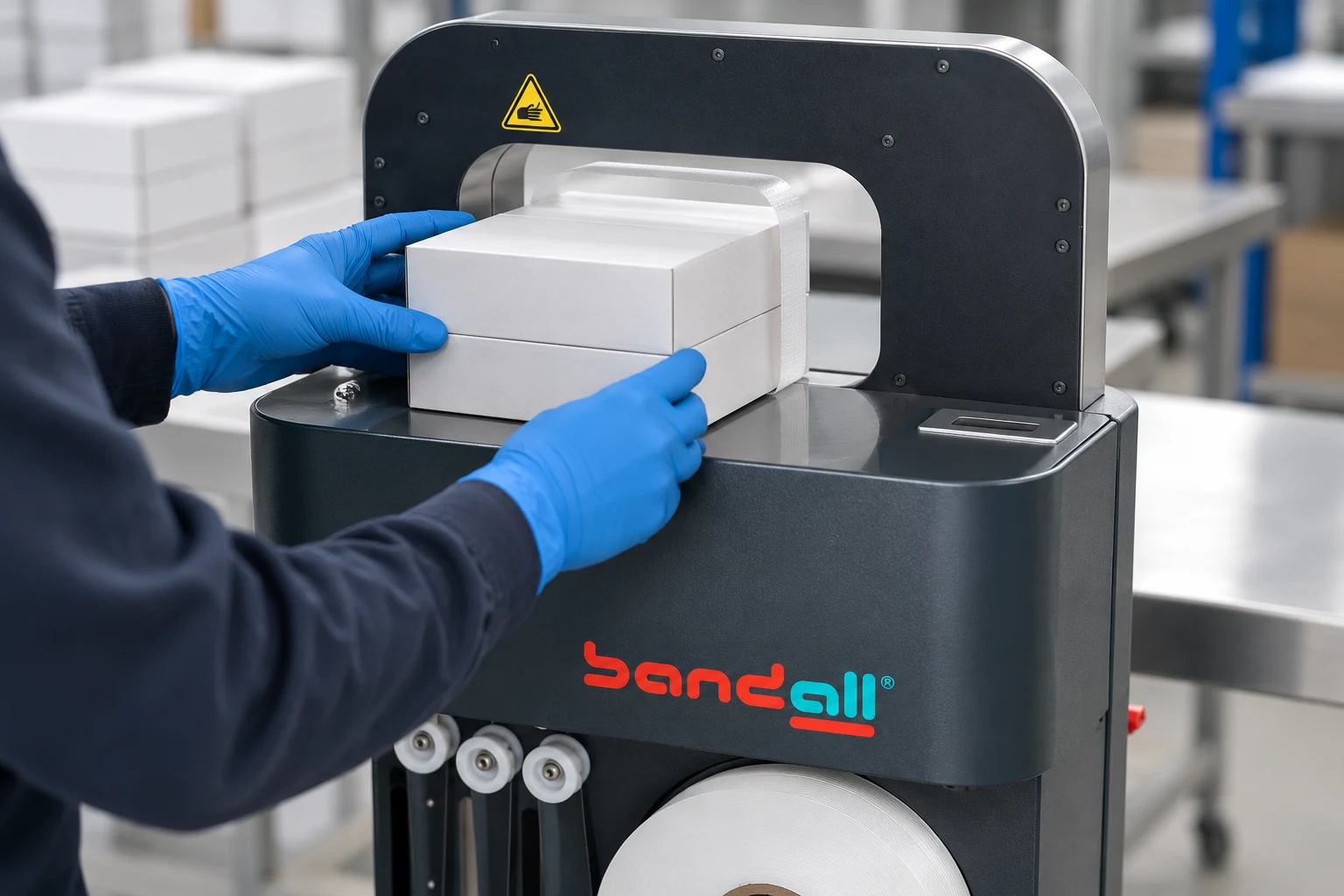
Then there is changeover, which is where most packaging lines lose their day. With a plain roll, a new product or pack size needs no change at all. With a roll printed only with your own branding, the same. Only when the printed information is specific to one product does the roll get swapped, and that takes about two minutes. There is no die and no tooling to change.
Tension is set from the machine menu, so a soft pouch and a rigid carton can run on the same unit. Soft packs take a little longer to set up the first time. That setup is our job during the demo, not yours.
What finance sees
The numbers that matter to finance are measured against whatever the machine replaces, and each comparison has to name its starting point.
Against shrink wrapping, a band uses up to 80% less material, because it covers a fraction of the surface. The machine uses up to 90% less energy than a shrink wrapping machine, because there is no heat tunnel to warm up or keep hot between runs.
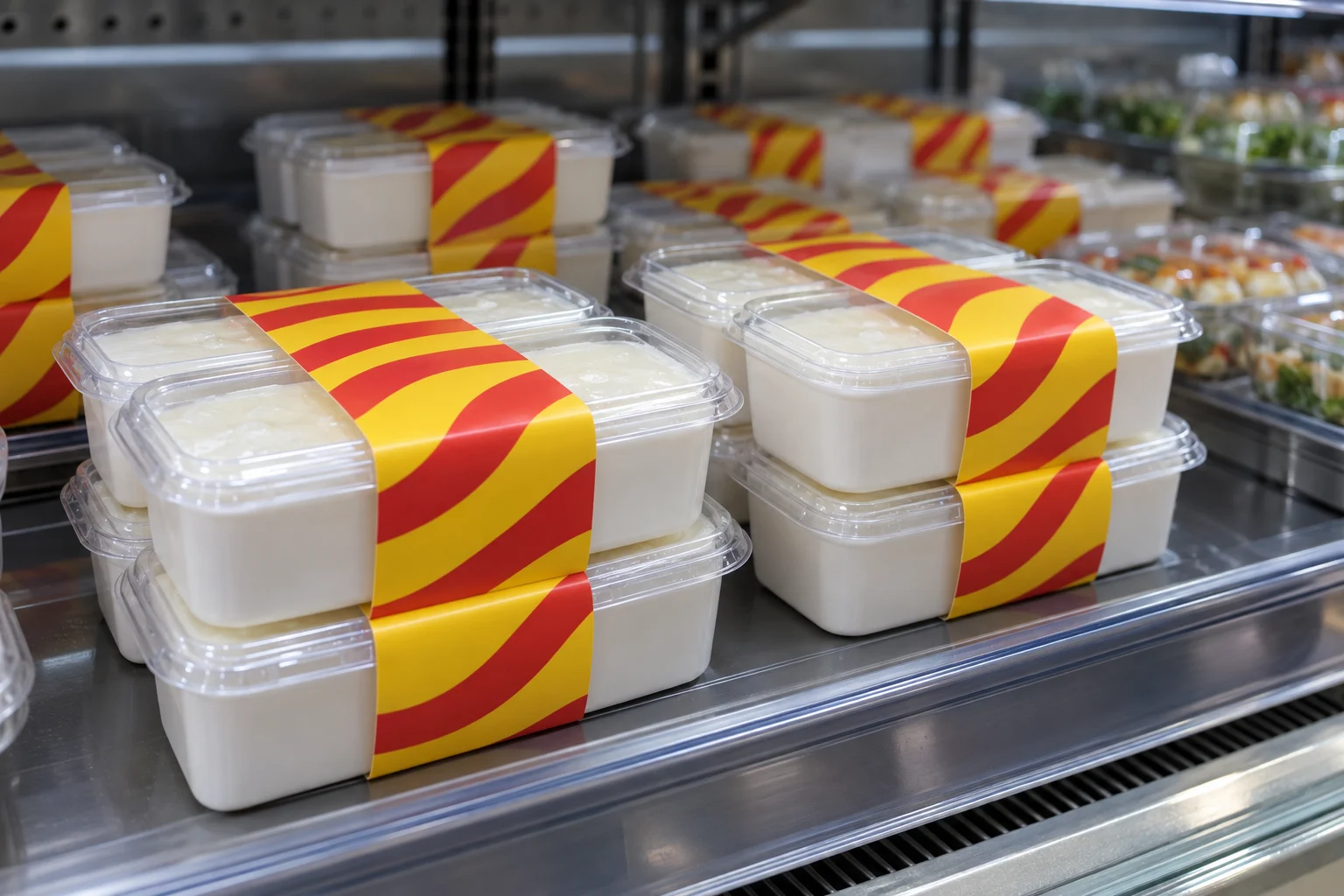
Against hand-applied labels, the clearest figures we have come from Balade Farms. Their labneh twin packs had been labelled by two people at up to 200 packs an hour. With one operator and a stand alone machine, the line reached up to 1,200. Output per person went from 100 packs an hour to 1,200, and material cost fell by up to 58% against the labels, because a printed band carrying the barcode replaced both the label and the backing paper that went in the bin every shift.
Those two sets of figures are not interchangeable. The 80% is against shrink; the 58% is against self-adhesive labels. Anyone quoting a saving without saying what it is measured against is not giving you a number you can use.
Finance can also check the consumable cost directly. Measure around the pack, add two centimetres for the overlap, and divide the roll length by the result. That gives packs per roll, and from there cost per pack. The full method is in our guide to choosing banding material.
What the brand manager sees
For a brand, the band is not packaging overhead. It is a printed surface placed exactly where the shopper looks.
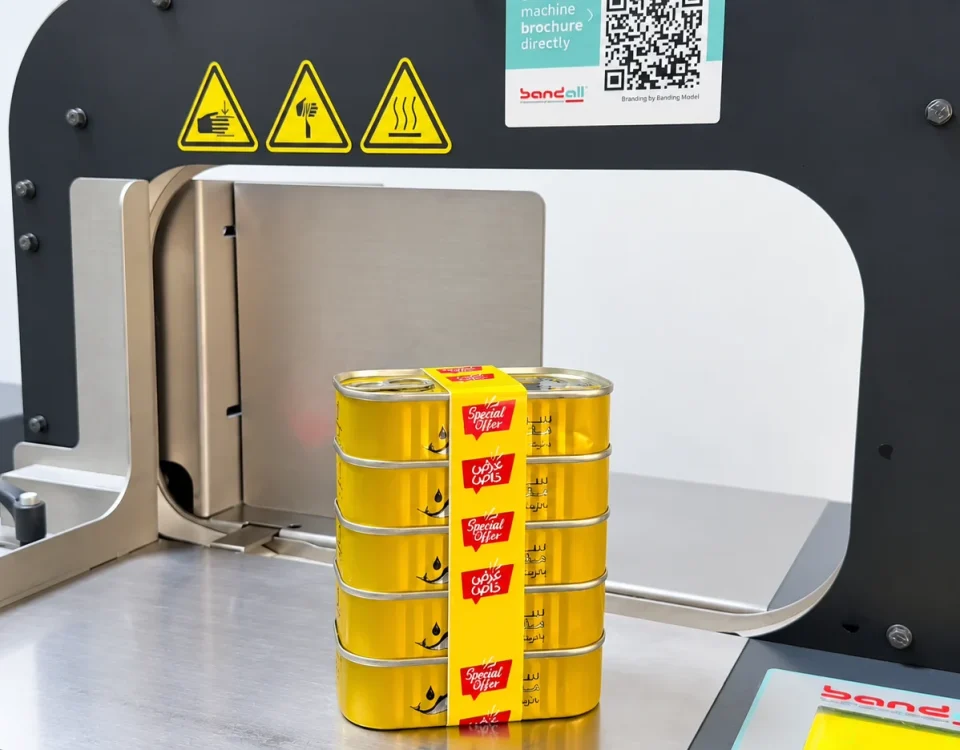
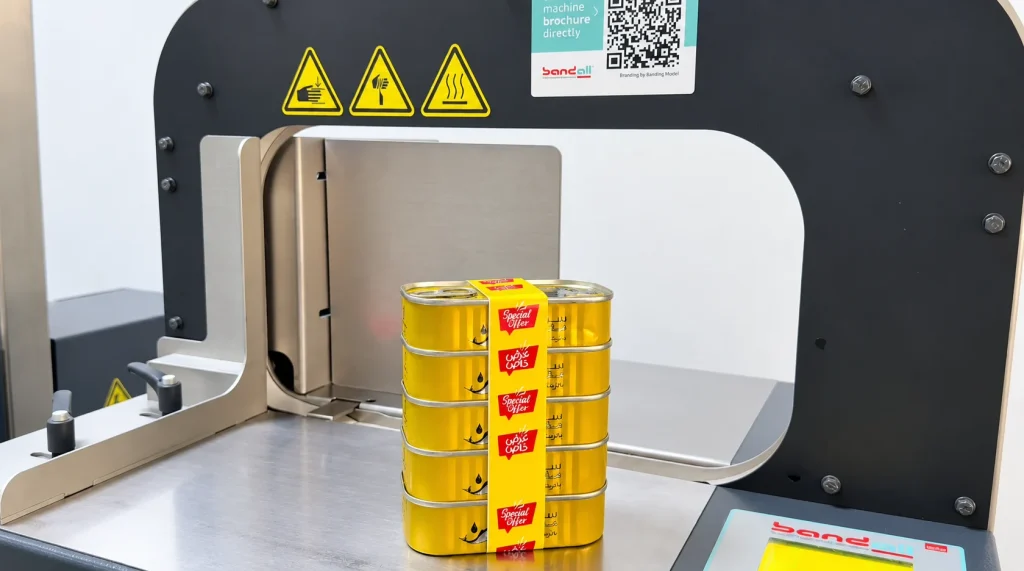
The product underneath stays visible, which matters in categories where the pack itself does the selling. A shrink film covers everything; a sleeve covers most of it. A band covers a strip.
Promotions move faster too. A plain roll with inline printing can carry a new offer, barcode and date the same day. A fully pre-printed band does have a minimum order of 100 rolls and a lead time of around three weeks, so it needs planning — but it needs no die, which is what holds sleeve promotions up.
And for brands with a plastic reduction target on the wall, a paper band is a visible change on the shelf that goes into ordinary paper recycling.
The advantages that matter after the first year
Some advantages are invisible at the point of purchase and only count later.
Support is one. Machines bought through us are supported by our own team for up to 15 years, with a one-year warranty on the machine. The most commonly needed spare parts are held in Dubai; anything else comes directly from the manufacturer in the Netherlands.
Layout is another. Factories change their floor plans, and a stand alone machine on four wheels moves with them rather than having to be decommissioned and reinstalled.
And there is the question of the next product. A line built around tooling has to budget for new tooling every time the range changes. A banding line does not. The machine you bought for one product will band the next one, provided it forms a block the band can close around.
Where it is not the advantage
Banding is not the right answer for heavy or long loads, which belong to strapping; for sealing shipping cartons, which belongs to tape; or for a full moisture barrier, which belongs to shrink film.
It is also worth knowing that band material, like every packaging consumable, follows the market on price.
See the advantages on your own product
Send us your pack, or bring it to our showroom in Dubai Investments Park. We band it, film it and send back the samples within two working days, and if you share your current output and consumables, we will work out the cost per pack for your line.
Book a free demo in Dubai — contact us, look at the stand alone banding machines, or see how product bundling works in practice.
Frequently asked questions
What are the main advantages of a banding machine?
Fast setup, fast changeovers with no tooling, lower material and energy use than shrink wrapping, a printed surface for branding and barcodes, and higher output per operator than hand labelling or taping.
What power does a stand alone banding machine need?
Ordinary single-phase mains power, plus an air compressor. No three-phase supply or special installation is required.
How much can banding save?
It depends on what it replaces. Against shrink wrapping, a band uses up to 80% less material and the machine up to 90% less energy. At Balade Farms, replacing hand-applied labels cut material cost by up to 58% and raised output per operator from 100 to 1,200 packs an hour.
What support comes with a banding machine?
Machines supplied by Bandall Middle East come with a one-year warranty and support from our team for up to 15 years. Commonly needed spare parts are held in Dubai.
When is banding not the right choice?
For heavy or long loads, which need strapping; for sealing shipping cartons, which needs tape; and for a full moisture barrier across the whole pack, which needs shrink film.