
What Are Band Labels?

Banding Machine Price UAE: What Drives the Cost
2026-10-07
Skin Packs and Banding: What Works Together
2026-10-15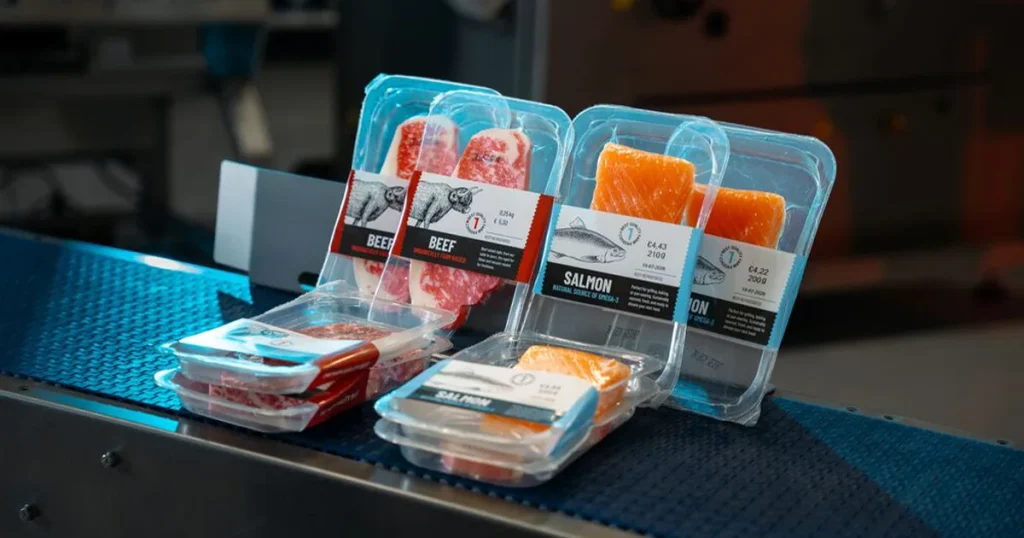
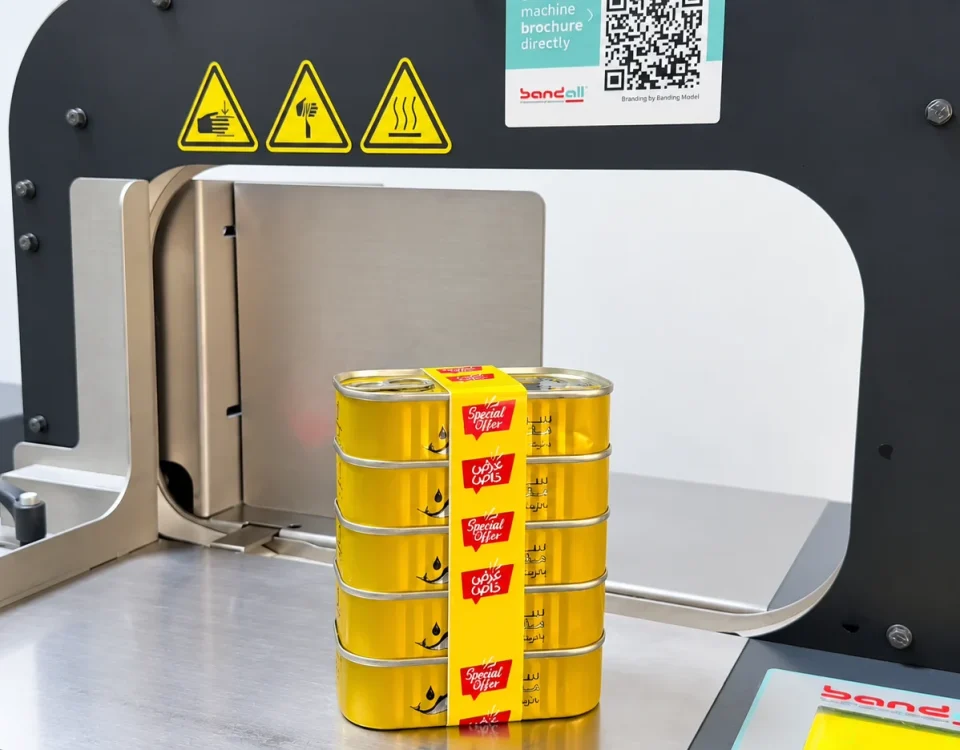
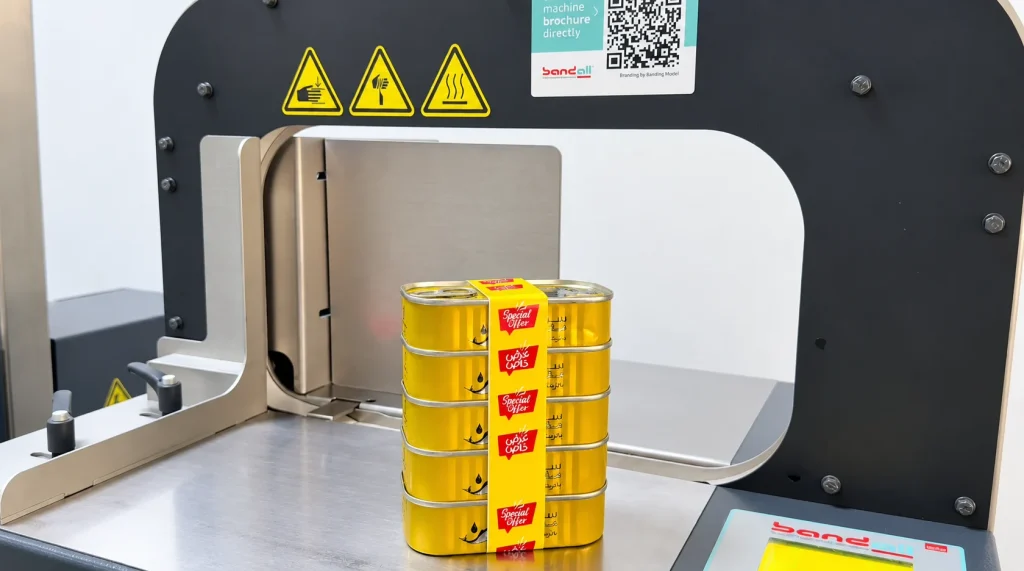
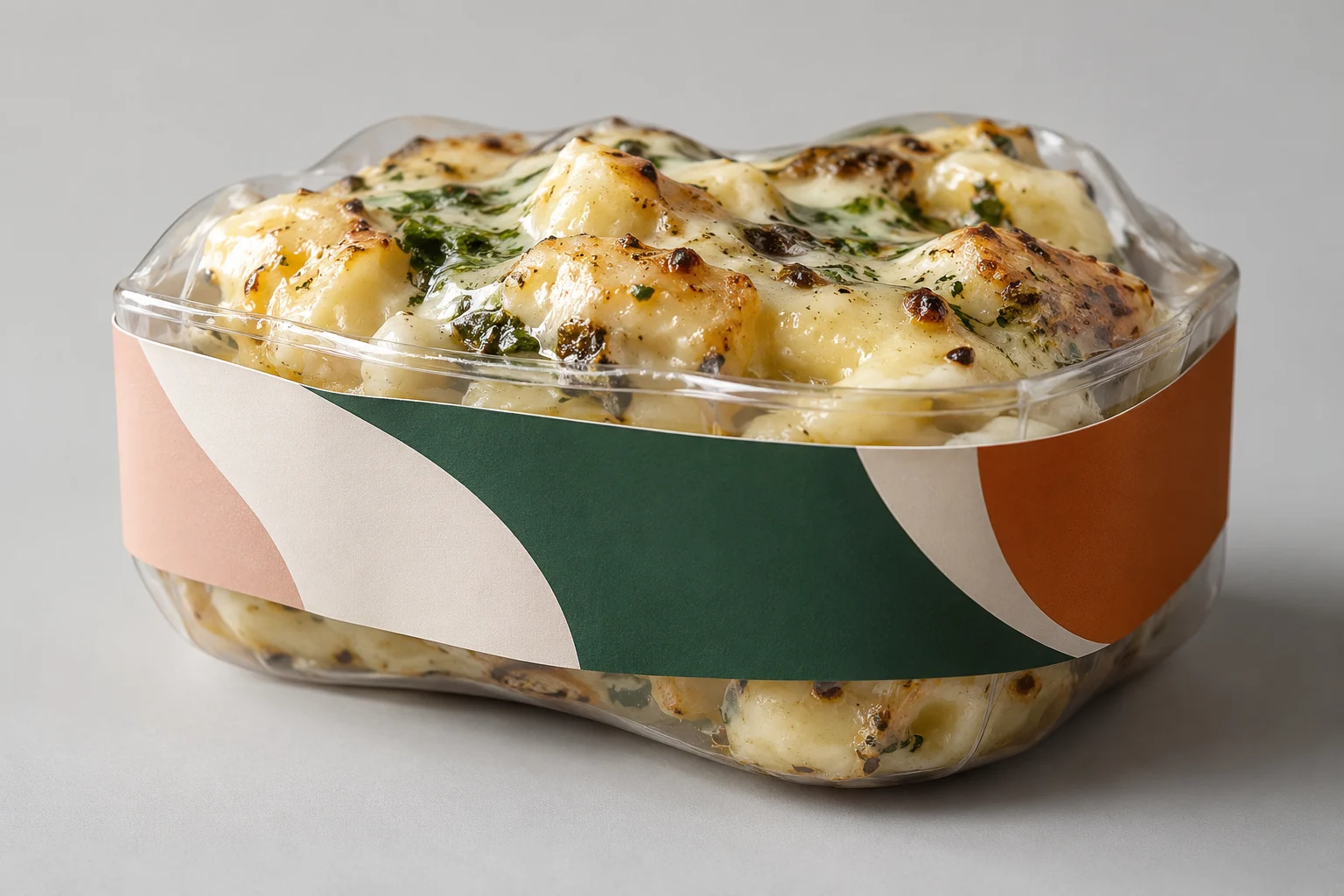
Band labels are what you get when the band stops being just a way to hold a pack together and starts doing the label’s job as well. The band is printed, wrapped around the product, tensioned and sealed onto itself. Nothing is stuck to the product at any point.
The question people really want answered is whether that counts as a label. It does, and that is where this gets interesting.
What a band label actually is
A narrow strip of paper or film comes off a roll, is formed into a loop above the product, closes around the pack and seals to itself. If that strip carries print, it is a label — it just arrives by a different route than a sticker.
Two things follow from the mechanics, and both matter more than they sound.
There is no adhesive, so the condition of the product surface stops being a problem. And the band passes right around the pack, so it does not need one flat face to sit on.
It is accepted as the product label
This is the question that comes up first in every meeting, so here it is plainly: a printed band is accepted as the product label, and that holds for paper and for film alike.
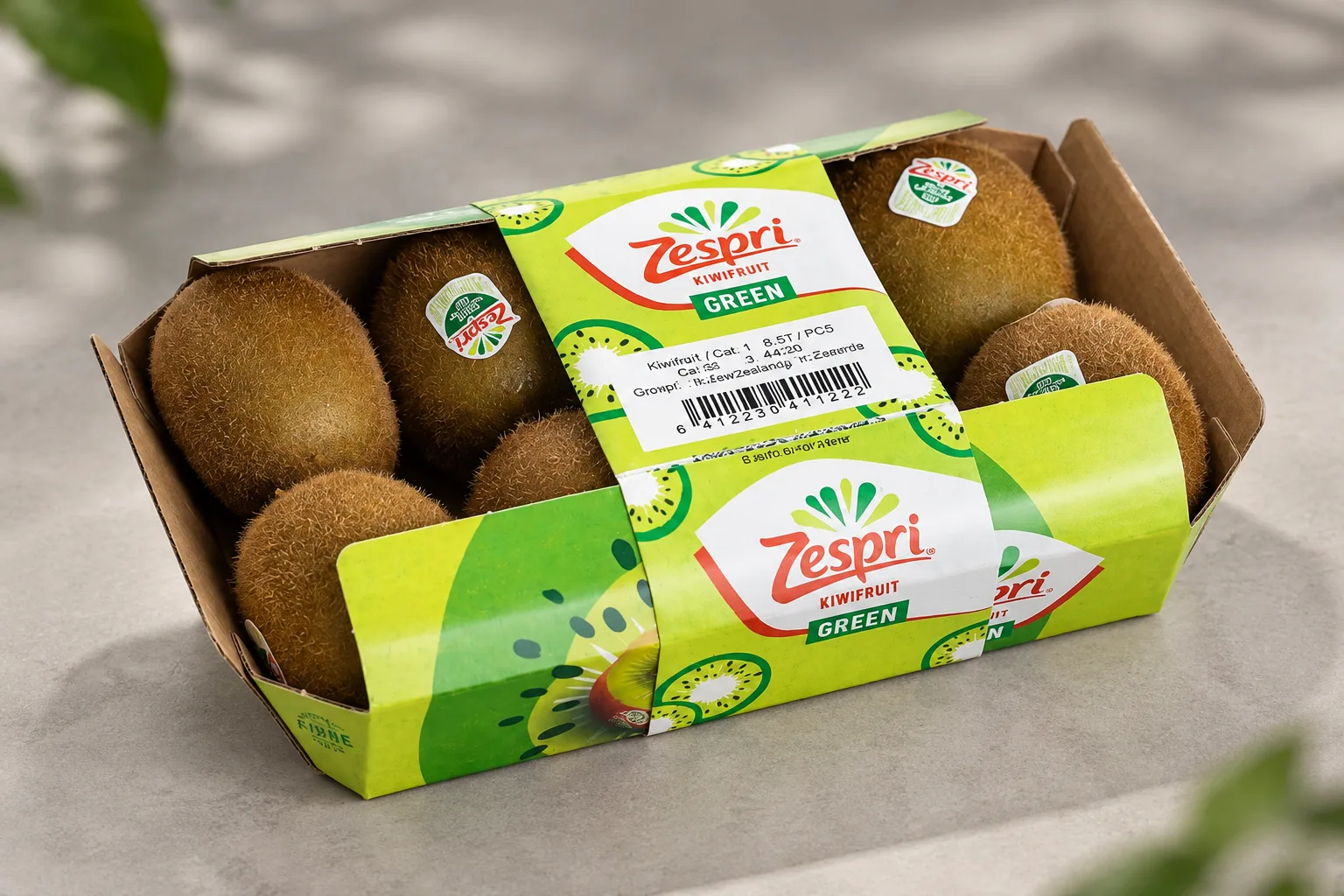
That means the mandatory information can live on the band itself. Ingredients, net weight, the nutrition panel, the barcode, batch and date. You are not obliged to run a separate compliance label underneath and use the band for decoration.
As with any label, have your own regulatory lead sign off the finished layout for the market you are selling into. The band is not the constraint — the artwork is the same artwork.
Where a self-adhesive label fails
Adhesive has one job and a handful of surfaces it cannot do it on. Frozen is the worst of them.
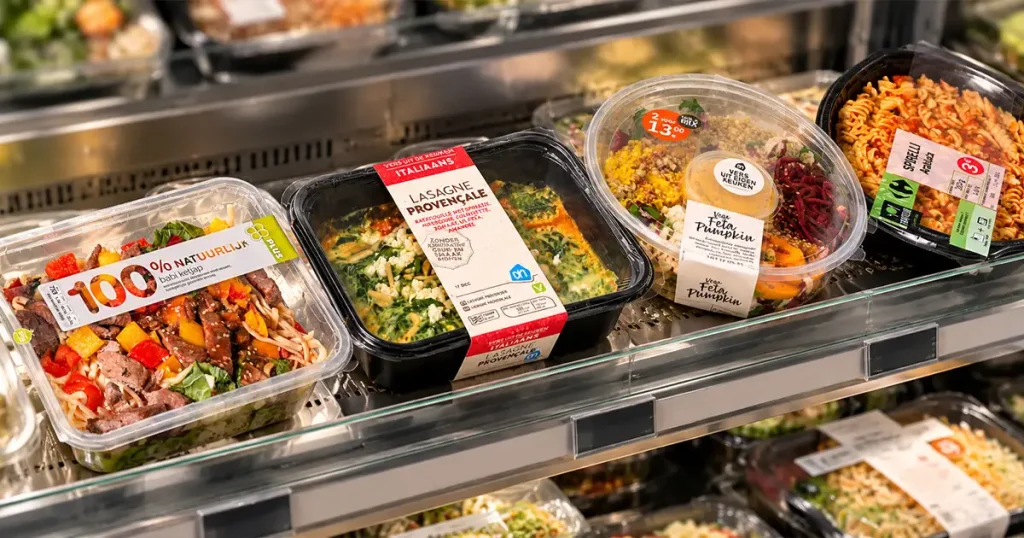
Walk through a frozen aisle and look at the promotional multipacks. Chicken frankfurters, three packs held together for an offer. You will often find adhesive tape doing the holding, because a self-adhesive label will not grip a frozen surface reliably and the line has given up trying.
Tape solves exactly one part of the problem. It holds. It carries nothing — no brand, no offer, no barcode, no price. The pack ends up held together by something that tells the shopper nothing, and the offer has to be communicated by a shelf barker instead.
A band does both jobs in one pass. It holds the multipack, and the offer, the barcode and the branding are printed on the thing doing the holding.
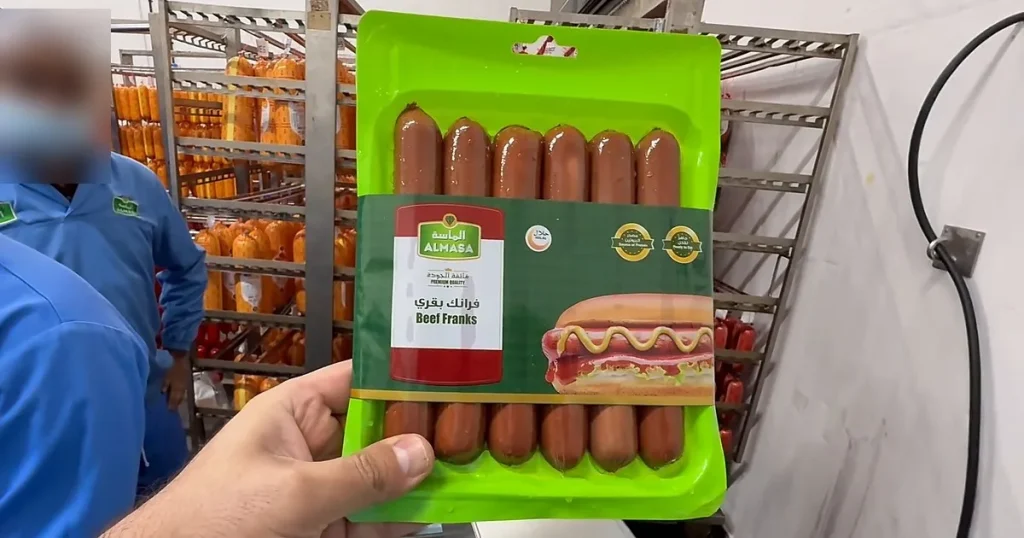
The same logic runs through everything adhesive struggles with: soft pouches that flex, tubes, cold and damp surfaces, anything with a curve too tight for a label to lie flat. A band wraps rather than sticks, so the surface stops being part of the decision. Chilled meat and seafood in skin packs are a clear example.
There is no print limitation
Worth saying because people assume there must be one. There is not.
Full-colour artwork, fine text, barcodes, QR codes, data matrix. Whatever goes on a label goes on a band. The band width sets how much space you have, not what can be printed in it.
Pre-printed or printed inline
Two ways to get the print onto the band, and most lines end up using both.
A pre-printed roll arrives with your fixed artwork already on it. Best for anything that stays the same all year — brand, product name, the standard panel. It carries a minimum order of 100 rolls and a lead time of three to four weeks, so it belongs in the plan rather than in a rush.
A plain roll goes on the machine blank and the integrated printer puts variable data on it at the moment of banding. Batch, weight, date, a promotional code, a serial number. Nothing is printed until the pack is in front of the machine, so nothing is wrong when a detail changes.
Running both means the fixed branding is pre-printed and everything that moves is added inline. The practical effect is that the label stock leaves the store cupboard, and with it the reorder every time a date format or a weight band changes.
What it does to the cost
One figure we can stand behind, and it needs its baseline stated: at Balade Farms, replacing manual labelling with banding cut material cost by up to 58% — against self-adhesive labels specifically, not against anything else.
Part of that is the band covering a strip rather than carrying a backing sheet. The rest is the liner. Every self-adhesive label arrives on a paper carrier that goes in the bin, every shift, and nobody counts it until they stop buying it.
Where a label is still the better choice
A sticker has real advantages and they are worth knowing before you move.
A single flat face, at very high speed. If the pack has one good surface and the line runs an established high-speed labeller, a label applicator is doing that job efficiently. There is no reason to replace what works.
A pack that will not form a block. A band has to close around something and hold it. A label only needs one face to stick to. A loose or irregular group that does not sit square is a label problem, not a banding one.
Very small items. Below the band width range there is nothing for a band to wrap.
The honest version of this comparison is that a band label wins where adhesive struggles and where the band is also holding something together. On a flat, dry, single-surface pack that needs no bundling, a label is fine.
See a band label on your own product
Send us the pack, or bring it to the showroom in Dubai Investments Park. We print a band with your artwork, band the product and send back the banded samples with photographs and video inside two working days — including on the surface you think will be the problem.
See a band label on your product — contact us, or look at labelling with a band, printed bands and printing while banding.
For band widths, roll lengths and paper or film specifications, see our guide to banding materials.
Frequently asked questions
What are band labels?
A band label is a printed paper or film band that wraps around the product, tensions and seals onto itself, carrying the artwork and data a label would carry. There is no adhesive and no backing sheet.
Is a band accepted as the product label?
Yes, in paper or film. The mandatory information — ingredients, net weight, nutrition panel, barcode, batch and date — can be printed on the band itself. Have your regulatory lead approve the finished layout for your market, as you would with any label.
Why do self-adhesive labels fail on frozen packs?
Adhesive does not grip a frozen surface reliably. That is why frozen promotional multipacks are often held with adhesive tape instead — which holds the pack but carries no branding, barcode or offer. A band does both.
Is there anything that cannot be printed on a band?
No. Full-colour artwork, fine text, barcodes, QR codes and data matrix codes all print on a band. The band width sets the available space, not what can go in it.
Pre-printed band or inline printing?
Pre-printed rolls carry fixed artwork and suit anything unchanged all year, with a 100-roll minimum order and a lead time of three to four weeks. A plain roll with an integrated printer adds variable data as the band is applied. Most lines use both.
Is a band cheaper than a self-adhesive label?
At Balade Farms, switching from manual labelling cut material cost by up to 58% against self-adhesive labels. Part of that is the band covering a strip rather than a full label; part is no longer throwing away the liner every shift.
When is a self-adhesive label still the right choice?
On a flat, dry single surface running on an established high-speed labelling line, and on packs too small or too loose for a band to close around and hold.