
How to Choose a Bundling Machine

Tape vs Banding: When Each One Wins
2026-09-11
Choosing Banding Material
2026-09-15
How to choose a bundling machine almost always starts with the wrong question. Nine enquiries out of ten open with price, and price is the one thing nobody can answer honestly until four other things are settled.
Those four are your product, your speed, the machine type that follows from them, and the roll. Work through them in that order and the price answers itself. Start with price and you end up comparing quotations for machines that are not doing the same job.
Start with the product, not the machine
Everything downstream depends on what you are actually bundling, and this is where most specifications go wrong before they begin.
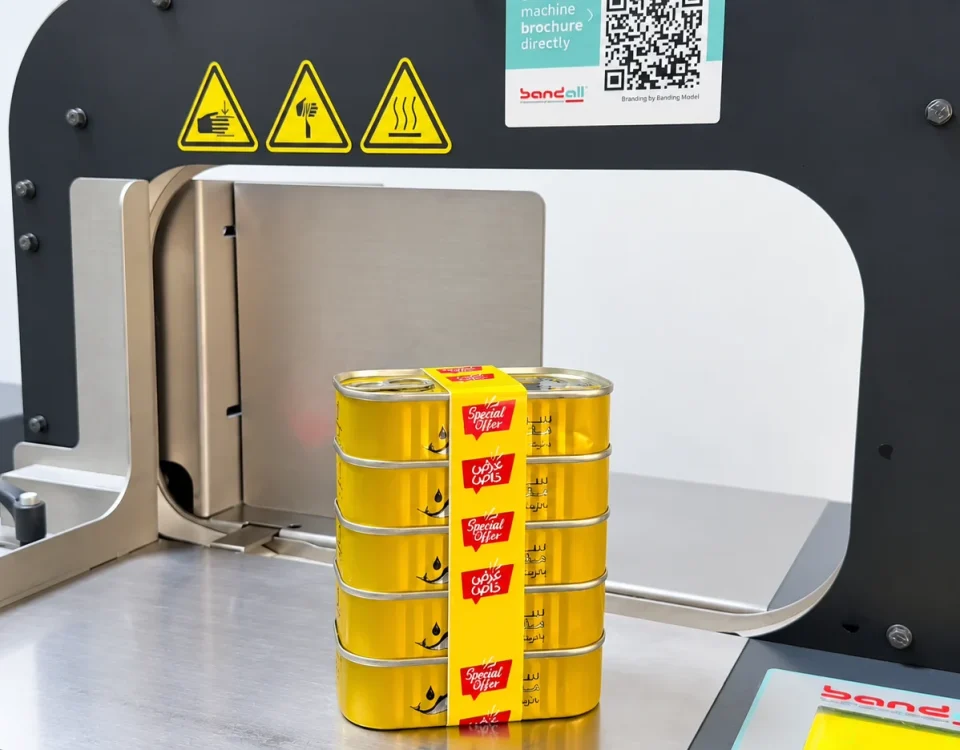
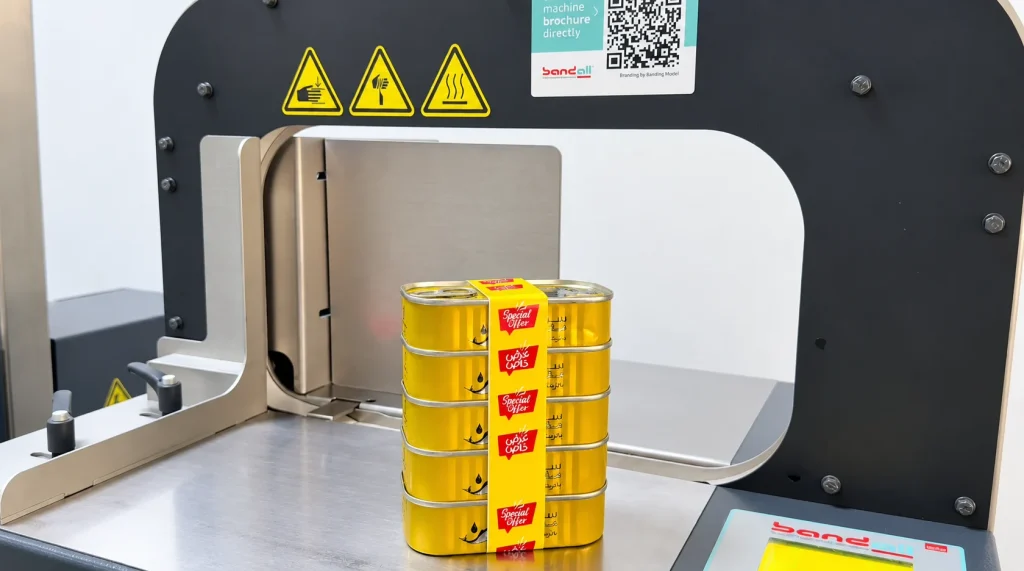
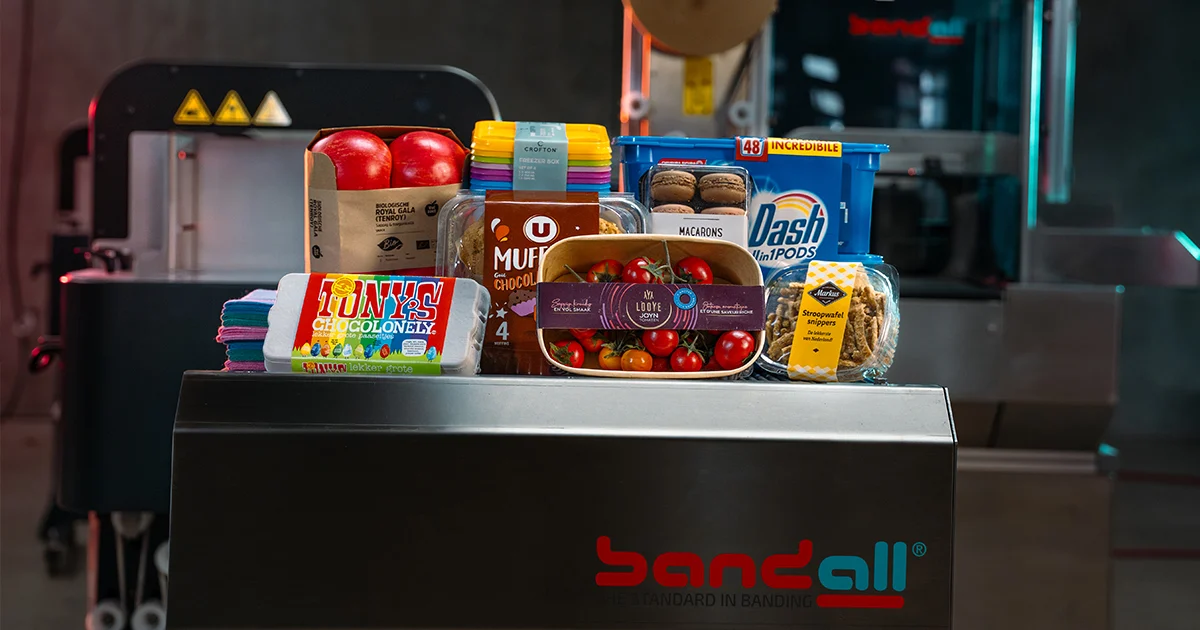
The first test is arrangement. Products have to form a block the band can close around and hold. Four tuna cans stacked on top of each other band cleanly. Four tall cans of sweetcorn standing side by side do not — the band goes round and finds nothing to grip. It is not about whether the product has a flat face; a folded blanket is round and soft and bands perfectly well.
The second test is variety, and it is the one people underestimate. A buyer will describe one product in detail and forget the eleven others that also need to run. Then the machine arrives sized for the exception rather than the range. List everything before you specify anything, including the seasonal lines and the promotional packs that only run twice a year.
Soft packs are worth flagging separately. A bag with give in it moves under the band, and finding the tension that holds without deforming the product takes a few attempts. That is normal, and it is our work rather than yours — you send the samples, we do the testing.
Then work out the speed you actually need
Most people ask for more than they will ever use.
The figure quoted for a single-head machine is up to 1,200 packs an hour, and it is worth understanding what that number means. It is not the machine’s ceiling. On a stand alone unit the operator sets the pace, because the limit is how fast someone puts packs into the arch. We have watched an operator hold 22 packs a minute, well past the quoted figure, with the machine still not working hard.
So the real question is not how fast the machine goes. It is how fast your line delivers product to it, and whether you have someone standing there.
If you genuinely need more than one person can feed, that is what multi-head machines are for. A five-head configuration supports up to 7,200 packs an hour. Below that, paying for capacity you cannot supply is the most common way to overspend on this equipment.
Which machine type fits
Once the product and the speed are known, the type follows almost mechanically.
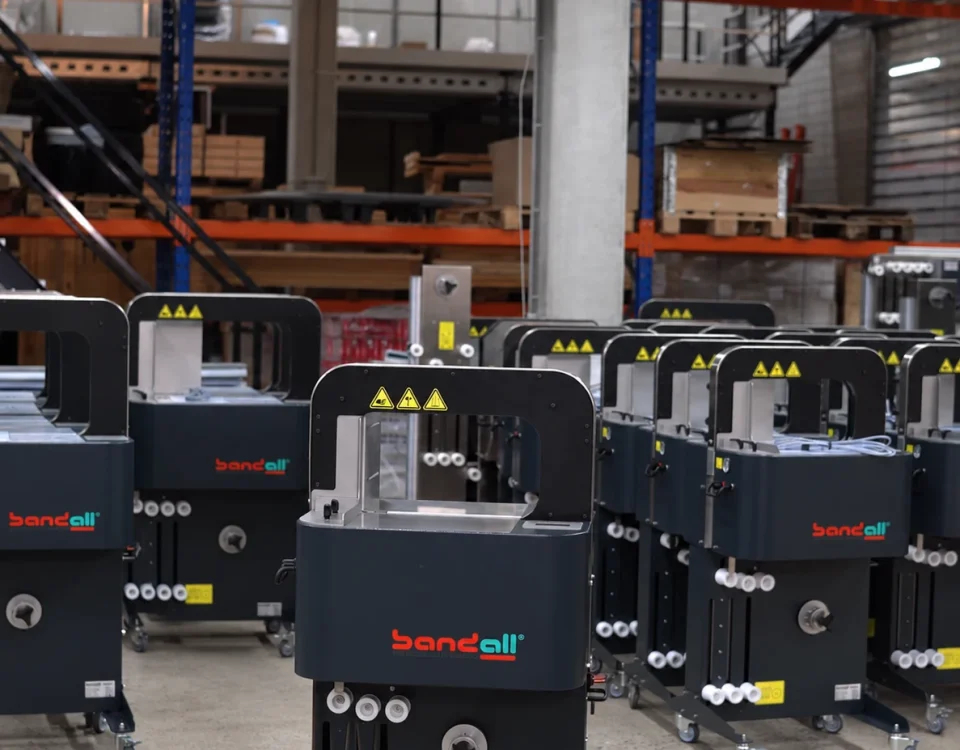
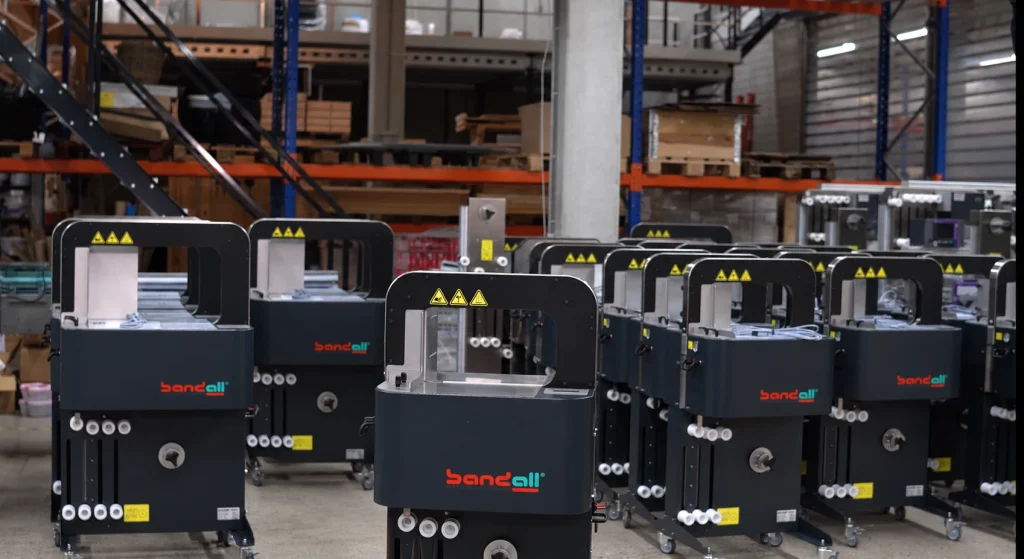
A stand alone machine is operator fed. The smallest weighs around 75 kilos, every model sits on four wheels, and it needs power, an air compressor, a roll and your product to start. Nothing else. For batch work, seasonal runs and lines where somebody is already handling the packs, this is usually the right answer and usually the one people skip past.
A fully automatic machine sits inline. The pack arrives on a conveyor and leaves banded with nobody touching it. This is the right choice when the line already runs continuously and the bundling step would otherwise need a person standing at it all shift.
A stacking and bundling machine does something the others do not: it arranges the products itself, stacking them on top of each other or setting them side by side, and then bands the arrangement. If your product arrives loose and the bundle has to be built before it can be held, this is the machine. If the pack is already assembled and only needs holding, it is not.
Multi-head machines are a speed answer, not a capability answer. And tailor-made machines exist for the cases the standard range genuinely cannot reach — which is fewer cases than most buyers assume, so ask whether a standard machine has been ruled out before commissioning a custom one.
The roll decision nobody makes early enough
This gets left until the machine is already installed, and it should not be.
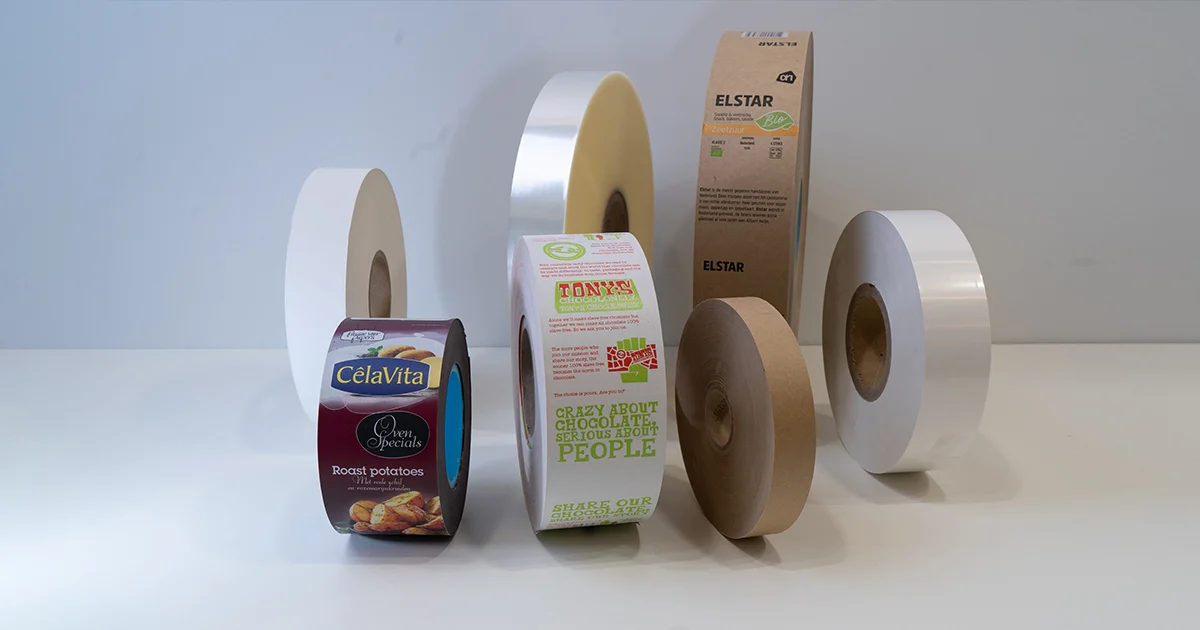
Start with paper or film. Paper suits dry, chilled and ambient packs, prints edge to edge, and goes into ordinary paper recycling. Film is for anything meeting moisture: frost off a blast freezer, condensation on a chilled tray, a damp warehouse in August. In this climate that decision comes up more often than the brochures suggest, and most customers here end up on film.
Then printed or plain, and here is where the economics move. A plain roll means a new product or a new pack size needs nothing at all — the machine carries on, the operator carries on, nobody stops. A roll printed with only your own branding behaves the same way. Only when the printed information is specific to one product does the roll get swapped, and that takes about two minutes.
Printed rolls do have ordering constraints, and it is worth knowing them upfront rather than discovering them: the minimum order is 100 rolls and the lead time is around three weeks. Plan promotional artwork accordingly.
What a band has no version of is tooling. There is no die. Printing a roll requires a cylinder per colour, which is a print setup rather than a piece of steel cut for one pack size — so a new pack shape does not put you back in the queue for new tooling. A cardboard sleeve does: a die for every size, plus its own minimum order, plus a lamination on top of that.
One more thing that moves the number more than people expect: thickness. Film runs from 35 to 100 micron and 50 is the usual specification. On most products, going thinner costs you nothing in performance and takes real money off the consumable bill. Weight is the only genuine constraint.
See the full banding material range before you sign for a machine, not after.
Three mistakes we see most often
Buying automatic when stand alone would do. Automation is the obvious answer to a problem most buyers do not have yet. If a person is already handling the packs at that point in the line, an operator-fed machine costs less, moves on its wheels when the layout changes, and does not need integrating with anything.
Underestimating product variety. The machine gets specified for the flagship product and then meets the rest of the catalogue. Bring everything to the demo, including the awkward ones.
Leaving the roll until last. The consumable is the ongoing cost and the thing that decides how flexible the line will be. Deciding it after the capital purchase is backwards, and with a three-week lead time on printed rolls it can also hold up a launch.
Where a bundling machine is the wrong purchase
There are jobs this equipment should not be sold into, and it is worth knowing them before you spend.
Heavy or long loads belong to strapping. Steel or PET under high tension is what secures structural timber, steel bar and pallet loads. A paper or film band is not built for that. If you are weighing the two methods against each other, the strapping comparison covers it properly.
Closing a shipping carton belongs to tape. A band goes around a box; it does not shut one.
A full moisture barrier across the whole pack belongs to shrink film. A band covers a fraction of the surface by design.
Now, about price
Having spent the article deferring it, here is the honest version.
Against shrink wrapping, banding generally costs less. A band uses up to 80% less material because it covers a fraction of the surface, and a banding machine uses up to 90% less energy because there is no heat tunnel. Those are real advantages and they compound over a year.
But a machine price on its own tells you very little. What matters is cost per pack and payback on your line, and that is arithmetic rather than opinion. Send us your current production figures and your samples and we will work it out: material, energy, labour, time and waste, not just the roll. A comparison that counts only the consumable is not a comparison.
If you are new to the method, start with what banding is and come back to the specification afterwards.
Request a quote — tell us about your product and your line, or bring the pack to our showroom in Dubai Investments Park and see it banded before anyone talks about numbers.
Frequently asked questions
What is a bundling machine?
A machine that holds several products together as one unit, usually with a paper or film band applied through an arch and sealed onto itself. Some models also arrange the products first, stacking them or setting them side by side before banding.
How do I know which bundling machine I need?
Work through four things in order: the product and how it arranges, the speed your line actually delivers, the machine type that follows from those two, and the roll. Price is the output of that process, not the input.
How fast is a bundling machine?
A single-head machine is quoted at up to 1,200 packs an hour, but on an operator-fed unit the person sets the pace — we have seen 22 packs a minute in practice. For higher throughput, a five-head multi-head configuration supports up to 7,200 packs an hour.
Do I need a fully automatic machine?
Less often than people assume. If somebody is already handling the packs at that point in the line, a stand alone machine usually does the job for less money and moves on its wheels when the layout changes.
Will one machine handle all my products?
Usually, provided each one forms a block the band can close around. Four stacked tuna cans band cleanly; four tall cans side by side do not. Bring your full range to the demo rather than the flagship product only.
What does a bundling machine need to run?
A stand alone machine needs power, an air compressor, a roll and your product. Automatic machines additionally need integrating with the conveyor feeding them.
Is there a minimum order for the banding rolls?
Plain rolls have no minimum. Printed rolls have a minimum order of 100 rolls and a lead time of about three weeks, so plan promotional artwork in advance. Neither involves any tooling — a band has no die, unlike a cardboard sleeve which needs one for every pack size.