
What Is Banding?

Every year on August 7th: Particularly Preposterous Packaging Day
2025-08-07
Tape vs Banding: When Each One Wins
2026-09-11Banding in packaging means placing a narrow band of paper or film around one or more products, pulling it to a set tension and sealing it, to bundle, label, seal or brand the pack without adhesive, heat or shrink film.

What is banding? A narrow strip of paper or film goes around your pack, tightens to a set tension, and seals onto itself. That strip is the band. Nothing sticks to the product. Nothing passes through heat.
Simple enough. The reason people keep asking about it is what happens next: that band is also a printed surface, a tamper indicator, and quite often the reason a sleeve, a shrink wrap or an outer carton stops being necessary.
How a band is applied
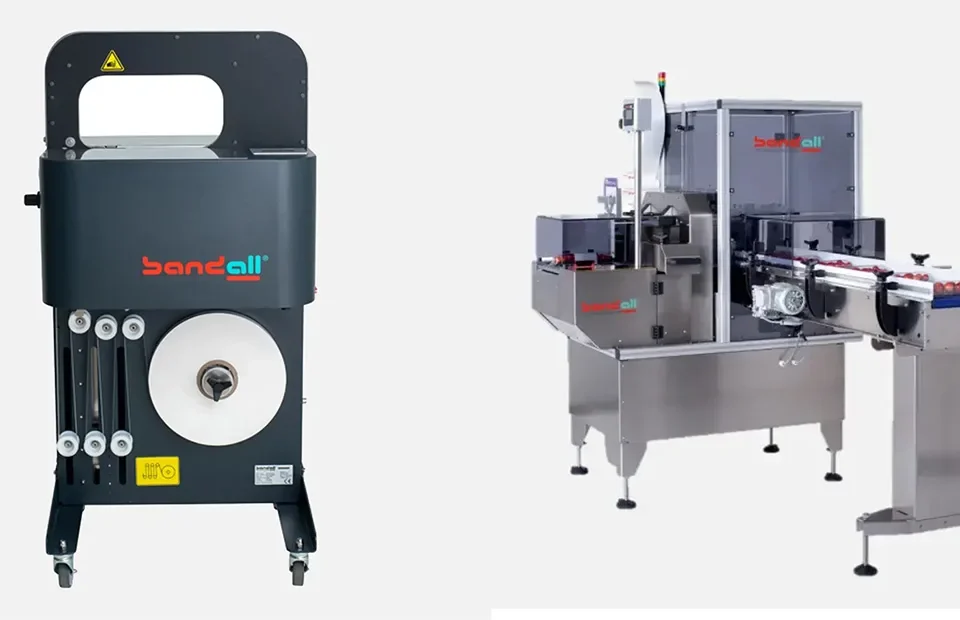
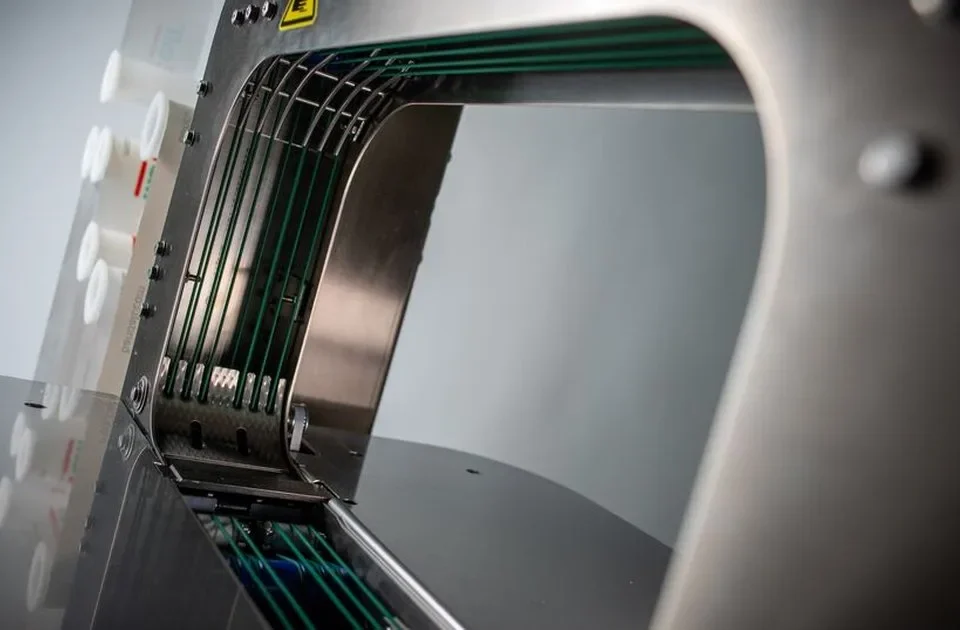
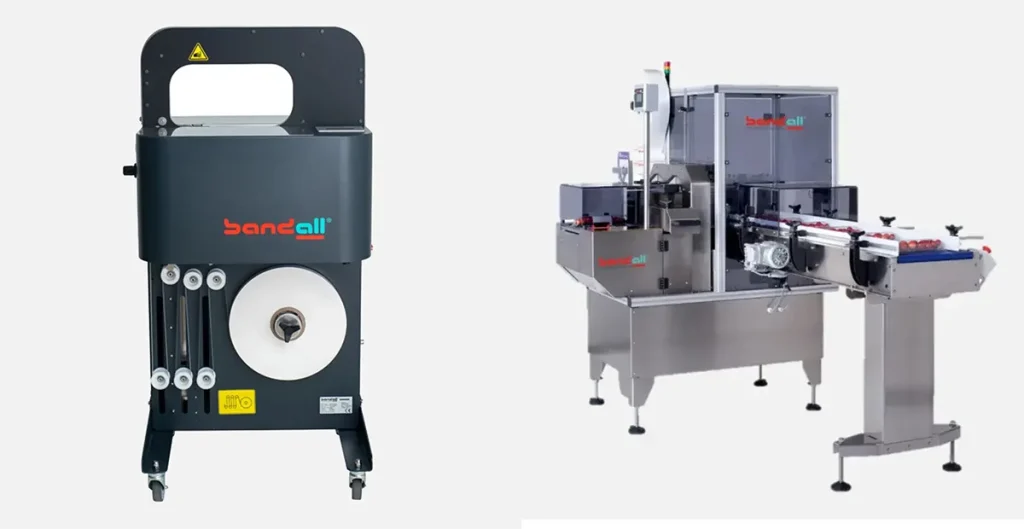
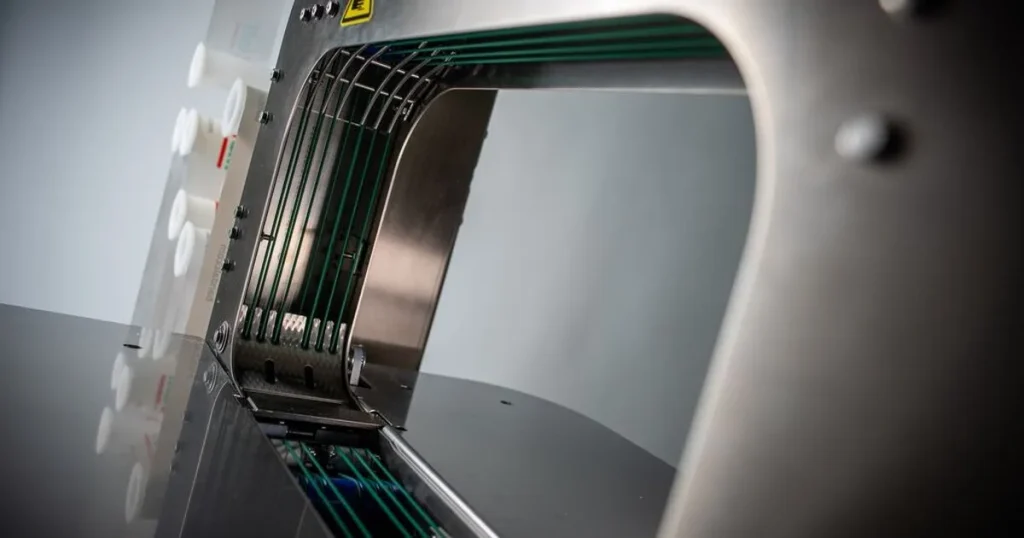
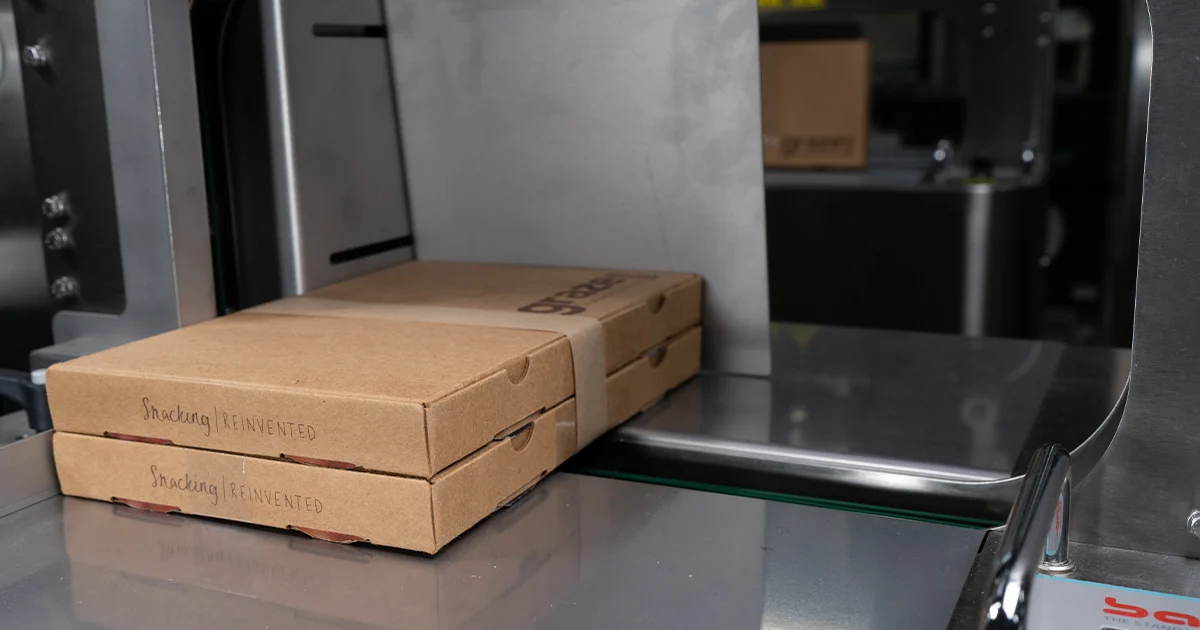
The band feeds off a roll into an arch — the frame you can see standing above the product position. The loop is formed there, before the pack arrives.
That detail does more work than it looks like. Because the loop already exists, nothing has to be threaded around your product and the pack never has to be lifted or turned. It sits still. The band comes to it.
Once the pack is in position the machine draws the band back out of the arch, closes it around the product, tensions it, seals the overlap and cuts. On a stand alone machine an operator feeds each pack by hand. On an automatic machine the pack arrives on a conveyor and leaves banded without anyone touching it.
A stand alone machine needs four things to start: power, an air compressor, a roll and your product. That is the whole list.
How fast it actually runs
The figure usually quoted for a single-head machine is 1,200 packs an hour. That is not the machine’s ceiling.
On a stand alone unit the limit is the operator, not the mechanism. How quickly packs get banded depends on how quickly someone puts them into the arch. We have watched an operator hold 22 packs a minute, which is above the quoted figure and was nowhere near the machine’s limit.
If you need more than one person can feed, that is what multi-head machines are for. A five-head configuration supports up to 7,200 packs an hour.
Band widths run from 28 to 125 mm, which covers a wide range of pack sizes on one machine.
Changing products does not mean changing the line
This is where banding differs most from the alternatives, and it is worth being precise about it.
If you run an unprinted roll, a new product or a new pack size needs nothing at all. The machine carries on. The operator carries on. Nobody stops.
If you run a printed roll carrying your own branding with no barcode, the answer is the same. Nothing changes.
Only when the printed information is specific to the product — a barcode, a promotional message tied to one line — does the roll have to be swapped. That swap takes two minutes at the outside.
And there is no tooling anywhere in that sentence. A roll has no die. Printing one requires a cylinder per colour, which is a print setup, not a piece of steel cut for one pack size.
What people notice in a demo
The technology is rarely what surprises anyone. Two other things do.
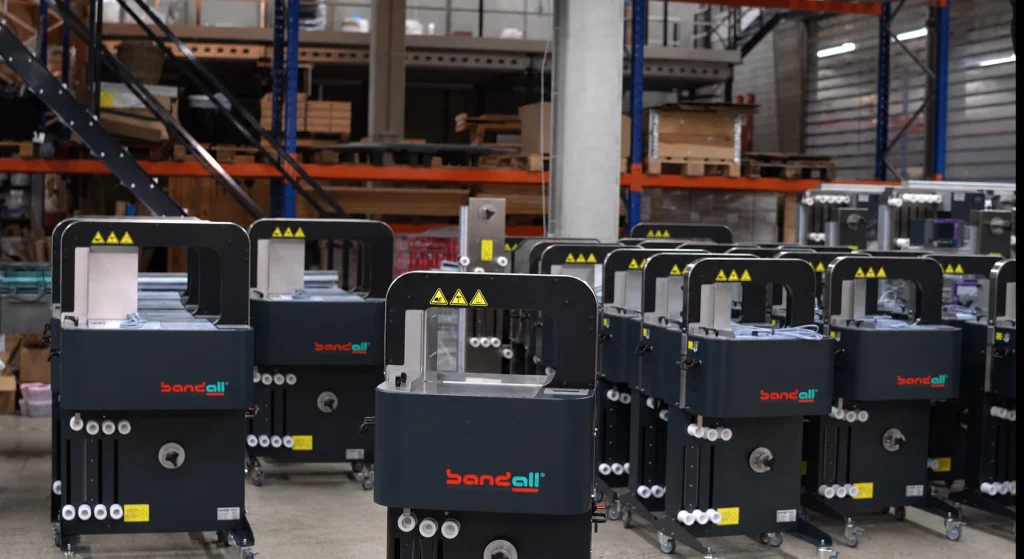
The first is the machine itself. The smallest stand alone unit weighs about 75 kilos and every model sits on four wheels, so it moves where you need it rather than dictating where the line goes. Operators are usually running it unaided within a few minutes. There is no training course.
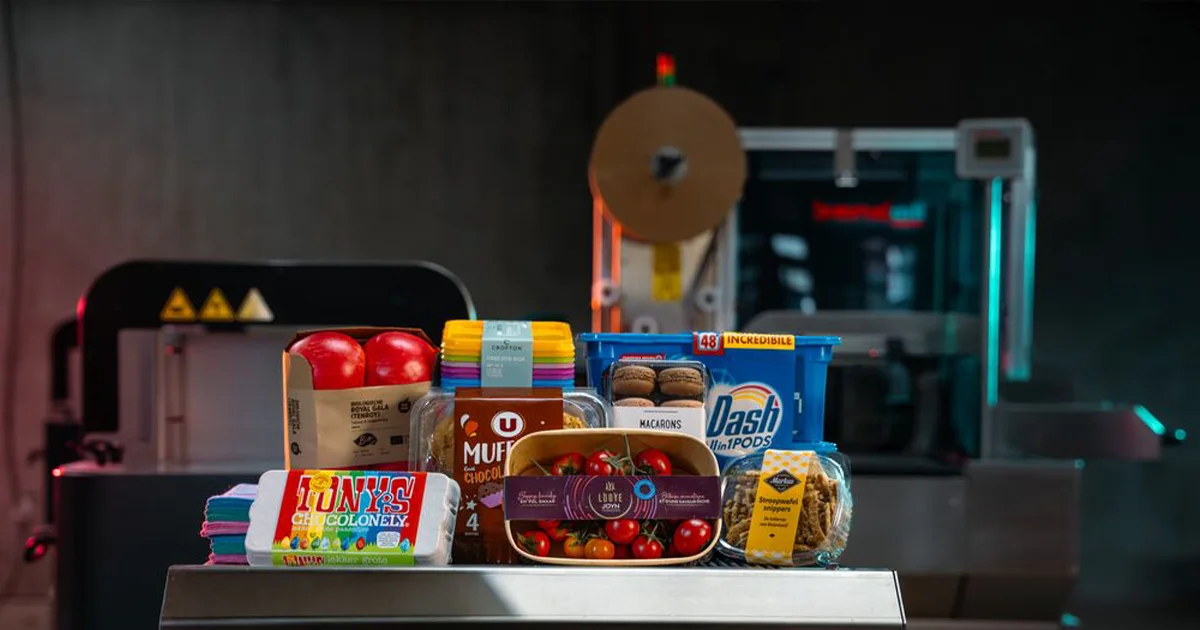
The second is the range. In a single session we have banded crisp packets, cheese, chocolate, biscuits, folded blankets and a four-pack of chicken. Same machine each time.
Tension is the setting that decides everything
Ask one question before anything else: how much force can your product take?
Tension can be switched on or off from the machine menu, and the amount is adjustable. That matters for soft products — trays, containers, pouches — where the point is to hold the pack without leaving any mark on it.
Soft packs take a little longer to set up. Finding the right combination on the first run is not instant, and that is normal. It is also our job, not yours: you send the product, we do the testing.
Compare that with what the alternatives do. A plastic strap concentrates all its force along a narrow line, which is exactly why it cuts into folded fabric, dents foam and creases the top sheet of a printed stack. Shrink film gets there differently and no better: it pulls inward as it cools, which is the last thing a filled tray needs.
A band spreads the same holding force across a much wider surface. The vacuum feed guides it around the pack instead of dragging it across the corners, which is where delicate packs usually get damaged.
What can and cannot be banded
The rule is not “does it have a flat face”. A folded blanket is round and soft and bands perfectly. So does a crisp packet.
The rule is arrangement. The products have to form a block the band can close around and hold.
Four tuna cans stacked on top of each other band cleanly — the stack is stable and the band holds it as one unit. Four cans of sweetcorn side by side do not. The band goes round, but there is nothing for it to hold against.
If you are not sure which side of that line your product falls on, send it to us. It takes a demo, not a discussion.
Paper or film, printed or plain
Two families, two states.
Paper is the default for dry, chilled and ambient packs. It prints edge to edge, matt or gloss. It goes into ordinary paper recycling, not a specialist plastic stream. If a brand has a plastic reduction target on the wall, this is usually the least disruptive change available to them: same machine, same speed, different roll.
Film earns its place wherever moisture does. Frost on a pack leaving a blast freezer. Condensation on a chilled seafood tray — and in this region, that condensation forms fast and stays. A damp warehouse in August. Paper weakens against all three. Film does not. It is also why skin packs are banded with film almost every time.
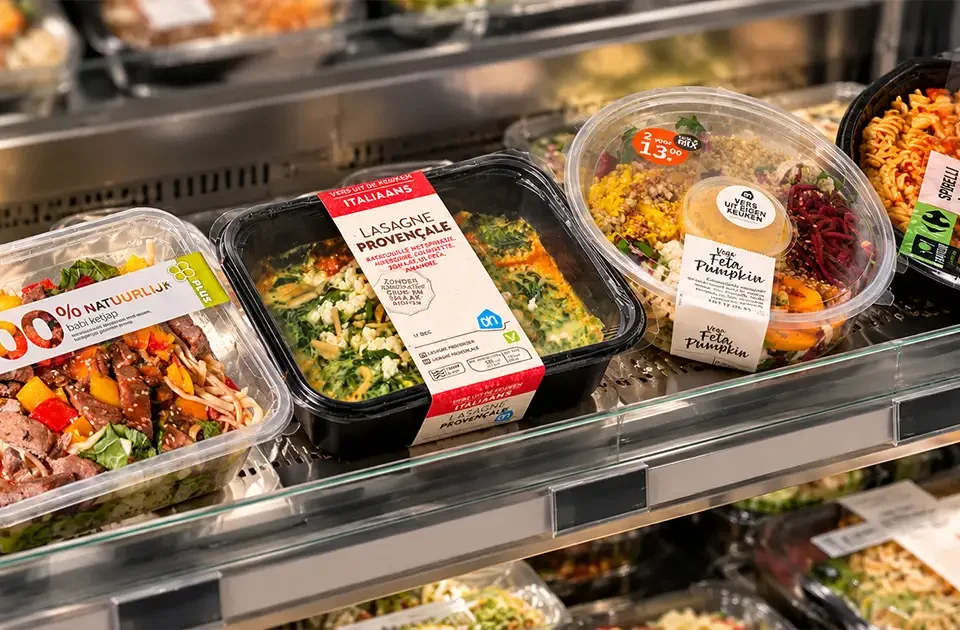
Then the second decision. Pre-printed bands arrive with your artwork on them. Plain bands stay blank and take variable data from an integrated printer at the moment of banding: batch, weight, date, barcode.
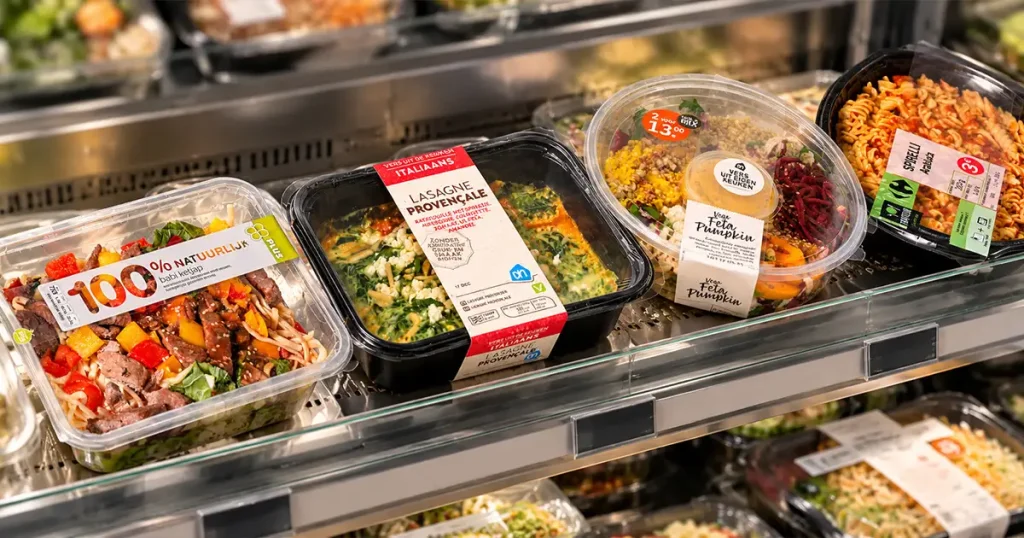
Most lines run both. Fixed branding printed in advance, changing data added inline. That combination is what takes the label stock out of the store cupboard, along with the reorder every time a detail changes.
When the band carries everything a label would, it becomes a band label: no adhesive, no liner, nothing stuck to the pack.
What banding usually replaces
Nine times out of ten, a band takes over a job something else was already doing badly.
Shrink wrap on a multipack is the obvious one. A film covering the entire product is doing far more than holding three units together, and it hides what the shopper came to look at. Drop the shrink and the heat tunnel goes with it: the line starts cold, runs from the first pack of the shift, and draws nothing while it idles. Against shrink, a band uses up to 80% less material.
Cardboard sleeves are the expensive one, and the cost is not only the board. Every pack size needs its own die, and most sleeves also need a lamination or a cellophane coating on top. That is a second process and a second supplier. Promotional runs suffer most: by the time the tooling lands, the promotion has moved on. A band handles any width in its range, so a new promotion means a new print file.
Self-adhesive labels are the frustrating one. Irregular shapes, soft pouches, tubes, cold surfaces, damp surfaces. Adhesive struggles with all of them, and a label lifting at the corner of a chilled tray reads as a quality problem to a shopper whether it is one or not. A band wraps rather than sticks. Surface stops mattering.
And shelf ready packaging is the one people get wrong. Most SRP today is shrink wrapped, not carton clad — which means the material and the energy are both there, on a pack whose whole purpose is to go straight to the shelf. A plain transparent band does the same job for a fraction of the cost and none of the heat.
Where banding is not the answer
This is the part most equipment suppliers leave out, so here it is plainly.
Heavy or long loads belong to strapping. Steel or PET under high tension is what secures structural timber, steel bar and pallet loads. A paper or film band is not built for it and should never be specified for it. If someone tells you otherwise, ask them what tension the band holds.
Shipping cartons belong to tape. A band will hold several small boxes together neatly. The closure of a large carton that has to survive a pallet stack and a truck is a different job.
Full moisture barriers and whole-surface tamper evidence belong to shrink. A band covers a fraction of the pack by design. The useful question is how many of your packs genuinely need the full wrap, and how many are getting one because that is what the line already had when someone specified it in 2015.
One more, because it comes up in comparisons: ultrasonic sealing is a technology other manufacturers use. Bandall machines seal with heat and the UCS system. Not ultrasonic.
Where to start
The fastest way to an answer is a sample, not a specification.
Send us your product, or bring it to the showroom in Dubai Investments Park. We choose the machine, the material and the tension, run it, and send back photographs, video and the banded samples themselves within two working days. You see it on your own pack before anyone talks about price.
If cost is the question, we can go further than a general answer. Give us your current production figures and we will calculate the cost per pack and the payback for your line specifically — and not only on material. Energy, labour, time and waste all move, and a comparison that only counts the roll is not a comparison.
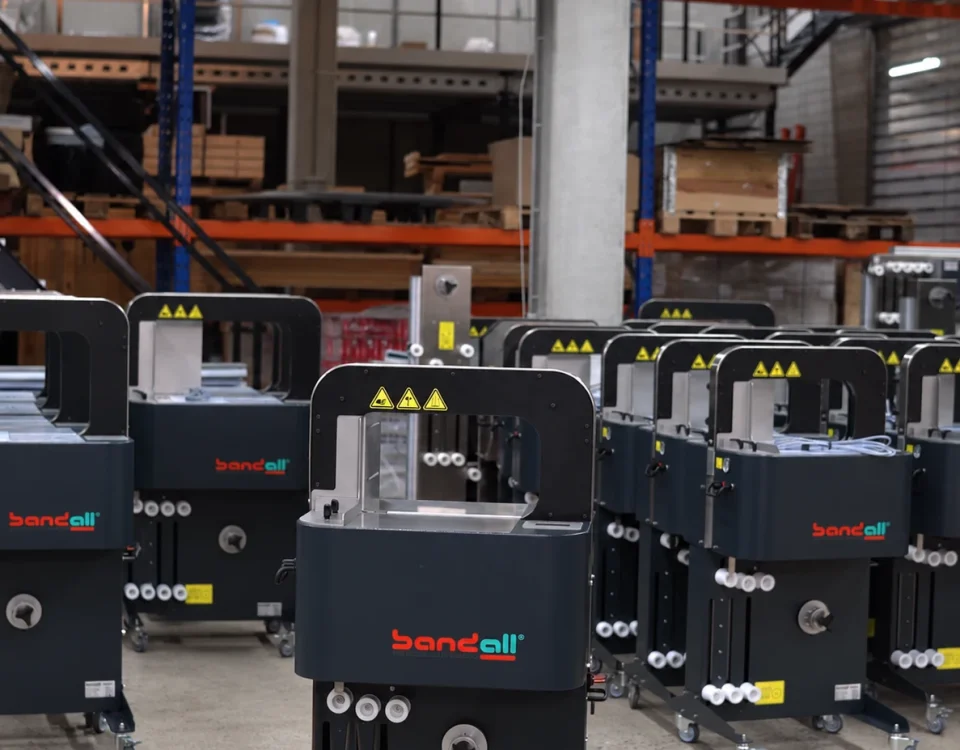
Bandall has built these machines in the Netherlands since 1990, supplies more than forty countries and works through more than thirty distributors worldwide. Machines and banding material for this region are held in Dubai, so commissioning and consumables do not cross a continent to reach your line. For manufacturers in the Kingdom, see banding machines in Saudi Arabia.
Book a free demo in Dubai — contact us with your product details, or look at the stand alone banding machines and the banding material range.
To compare banding with other methods, see tape vs banding and the advantages of a banding machine. Banding is not only for food: it is used to band blankets and linen for airline laundries and for pharmaceutical shelf ready packaging.
Frequently asked questions
What is banding in packaging?
Banding is holding a product or stack together with a narrow strip of paper or film that is tensioned and sealed onto itself. The band carries print, acts as a tamper indicator, and often removes the need for a sleeve, a shrink wrap or a label.
What is a banding machine?
A machine that feeds a band from a roll, wraps it around the product through an arch, tensions it to a set value and seals the overlap. A stand alone machine needs power, an air compressor, a roll and your product. Automatic machines run inline on a conveyor.
How fast is a banding machine?
The quoted figure for a single-head machine is up to 1,200 packs an hour, but that is not the ceiling. On a stand alone unit the operator sets the pace, and we have seen 22 packs a minute in practice. For higher throughput, a five-head configuration supports up to 7,200 packs an hour.
What products can a banding machine handle?
The test is arrangement, not shape. The products have to form a block the band can close around. Four tuna cans stacked on each other band cleanly; four tall cans of sweetcorn side by side do not. Crisp packets, cheese, chocolate, biscuits and folded blankets all band on the same machine.
Do I need a new machine for a new pack size?
No, and usually you do not even need a new roll. With an unprinted roll, or a printed roll carrying only your branding, nothing changes at all. Only when the printed information is specific to the product does the roll get swapped, and that takes about two minutes. There is no tooling: a roll has no die.
Is banding cheaper than shrink wrapping?
Generally yes. A band covers a fraction of the surface a shrink film does — up to 80% less material — and a banding machine uses up to 90% less energy because there is no heat tunnel. But we would rather calculate it than assert it. Send us your production figures and your samples and we will work out the cost per pack and the payback for your line. Material is only part of it; energy, labour, time and waste all come down too.
Can you print on a band?
Yes, in two ways. Bands can be supplied pre-printed with fixed artwork, or left plain and printed inline during banding with variable data such as batch codes, weights and dates. Many lines use both.